FAQ
Frequently Asked Questions
Frequently asked questions about FRP grating and FRP pultruded grating at Dengtai — product selection, pricing, installation, and maintenance.
Browse Questions ↓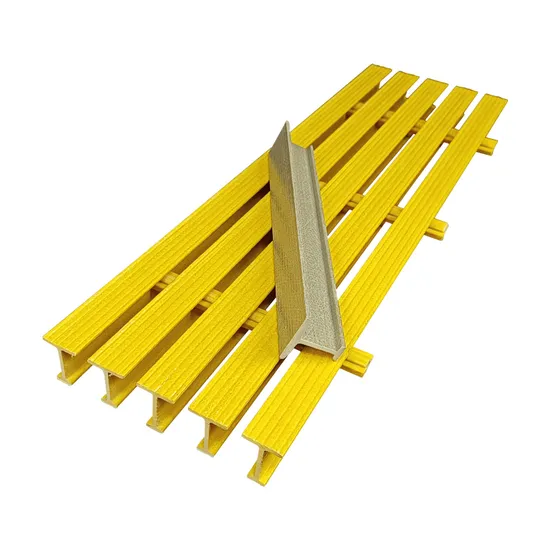
Knowledge Base
Installation
How do I cut FRP grating to custom sizes on site?
FRP grating can be cut on site using standard power tools with carbide-tipped blades. For straight cuts, use a circular saw with a fine-tooth carbide blade. For curved or irregular cuts, an angle grinder with a cutting disc works well. Always wear appropriate PPE including respiratory protection (FRP dust is an irritant), safety glasses, and gloves. Cut from the top surface to minimize edge chipping, and seal cut edges with a compatible resin to prevent moisture wicking.
What is the proper method for installing FRP grating on support structures?
FRP grating should be installed on clean, level support members with a minimum bearing surface of 25mm (1 inch) on each end. Use FRP or stainless steel hold-down clips spaced at maximum 600mm (24 inches) along supports. Pre-drill holes using carbide bits — never punch or hammer through the grating. Ensure a 3–5mm expansion gap between adjacent panels. For anti-slip requirements, orient the grit-top surface upward. Always follow our installation guide or consult our technical team for project-specific instructions.
Can FRP grating be used outdoors in extreme weather conditions?
Yes, FRP pultruded grating performs exceptionally well outdoors. It is UV-resistant (we add UV inhibitors to the resin), does not rust or rot, and maintains structural integrity across a wide temperature range from -40°C to +120°C depending on the resin system. It is non-conductive and non-magnetic, making it ideal for outdoor electrical substations and marine environments. For areas with heavy snow loads, we recommend Heavy Duty profiles with closer bar spacing.
Maintenance
How long does FRP grating last and what maintenance is required?
FRP pultruded grating has a typical service life of 20–30+ years in most industrial environments with minimal maintenance. Unlike steel, it requires no painting, galvanizing, or corrosion treatment. Recommended maintenance includes periodic rinsing with water to remove chemical residue or debris, annual visual inspection for damage or wear, and checking that hold-down clips remain tight. In extreme chemical environments, bi-annual inspection is advised.
How do I clean FRP grating in chemical plant environments?
For routine cleaning, hose down with water or use a mild detergent solution with a soft brush. For chemical residue, consult the chemical compatibility chart and use an appropriate solvent — avoid strong caustic cleaners that may attack the resin. Never use steel brushes or abrasive pads that could damage the anti-slip surface. Steam cleaning is acceptable for most resin systems. After cleaning, rinse thoroughly and allow to drain naturally through the grating openings.
Products
What is FRP pultruded grating and how is it different from molded grating?
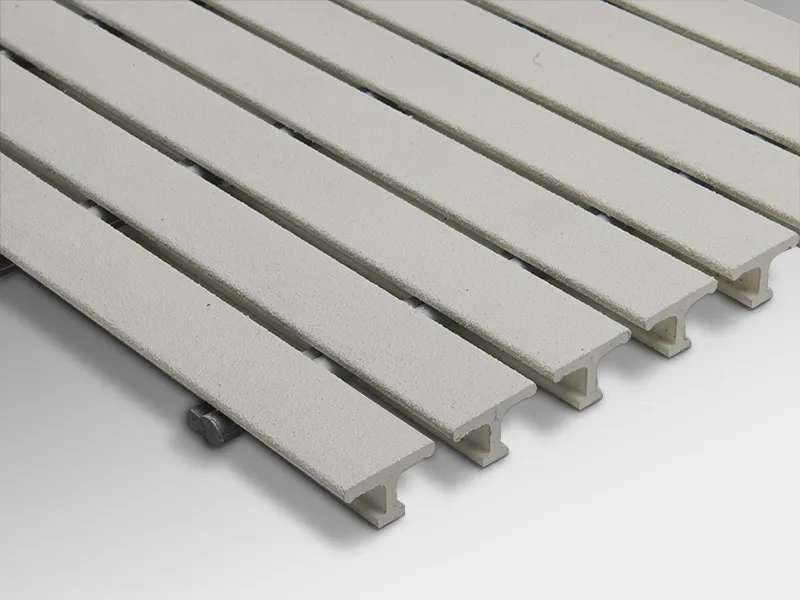
FRP pultruded grating is manufactured by pulling continuous glass fiber rovings through a resin bath and then through a heated die, creating a high-strength, uniform cross-section. Unlike molded grating (which is press-molded in a tray), pultruded grating has a higher glass-to-resin ratio, resulting in greater strength-to-weight performance and longer spans with less deflection. It is ideal for heavy-duty industrial applications such as platforms, walkways, and mezzanines where load-bearing capacity is critical.
What are the standard panel sizes available for FRP grating?
Standard FRP pultruded grating panels are typically available in sizes of 3.66m × 1.22m (12ft × 4ft) and 2.44m × 1.22m (8ft × 4ft). Standard depths range from 25mm (1 inch) to 50mm (2 inches). Custom sizes and cut-to-order dimensions are available for large-volume orders. Contact our sales team for specific size requirements.
Which resin types are available for FRP grating and how do I choose?
We offer three primary resin systems: polyester (standard economy), vinyl ester (enhanced corrosion resistance for chemical environments), and phenolic (fire-resistant with low smoke — ideal for offshore oil & gas). For most indoor industrial applications, polyester is sufficient. For exposure to strong acids, alkalis, or high temperatures, vinyl ester or phenolic is recommended. Our technical team can help you select the optimal resin based on your operating environment.
What load capacity ratings do your FRP grating panels support?
Our FRP pultruded grating is available in standard load ratings: Light Duty (up to 500 kg/m²), Medium Duty (500–1000 kg/m²), and Heavy Duty (1000+ kg/m²). The actual load capacity depends on panel thickness, bar spacing, and support span. We provide detailed load tables with deflection calculations for each product configuration. For specialized heavy-load applications, we can engineer custom profiles.
What is the difference between I-bar and T-bar pultruded grating?
I-bar grating features a cross-section shaped like the letter "I", offering higher strength and rigidity for longer spans. T-bar grating has a "T" shaped cross-section, which provides excellent lateral stability and is often more economical for shorter spans. I-bar is generally preferred for heavy industrial walkways and platforms, while T-bar is commonly used for trench covers and light-traffic areas.
Purchasing
How much does FRP grating cost compared to steel or aluminum?
While the upfront cost of FRP pultruded grating is typically higher than carbon steel (approximately 1.5–2x), it is generally comparable to or slightly less than aluminum. However, when you factor in lifecycle costs — zero corrosion maintenance, no painting required, 25+ year lifespan, and lighter weight reducing installation labor — FRP grating delivers significant long-term savings. Contact us for a detailed cost comparison tailored to your project.
Can I buy FRP grating directly from the manufacturer?
Yes — FRP Floor is a factory-direct manufacturer. We supply B2B buyers, distributors, and project contractors with wholesale pricing and no middleman markup. Minimum Order Quantity (MOQ) typically starts at 50 square meters for standard configurations, with lower MOQs available for sample orders. Request a quote through our contact page to receive pricing within 24 hours.
What shipping methods are available for international orders?
We ship worldwide via sea freight (FOB Shanghai), air freight, and express courier (DHL/FedEx for small samples). Full container loads (FCL) receive the most competitive rates, while less-than-container (LCL) is available for smaller orders. Typical sea freight to North America takes 20–30 days, and to Europe 25–35 days. We handle all export documentation, including packing lists, commercial invoices, and certificates of origin.
Do you offer OEM and custom sizes for bulk orders?
Absolutely. We support OEM manufacturing with custom panel dimensions, bar spacing, surface finishes (grit-top, concave, or standard), and color matching. Custom resin formulations are available for specialized chemical or temperature requirements. Please provide your specifications including span, load requirements, and environmental conditions, and our engineering team will provide a tailored solution.
Get Expert Advice from FRP Floor
Still Have Questions?
Our technical sales team can help you select the right grating type, size, and resin for your project. Contact us for a free consultation and factory-direct quote.
Need a Custom Solution?
We offer custom FRP grating sizes, resin formulations, and surface finishes. Get in touch with our engineering team today.
Ask a Question →