Introduction
Offshore oil and gas platforms operate in some of the harshest environments...
Introduction
The offshore oil and gas industry operates in one of the most demanding environments on earth. Constant exposure to saltwater, high humidity, extreme temperatures, and heavy mechanical loads makes material selection a critical decision for platform operators. FRP grating for offshore oil and gas platforms has emerged as the preferred flooring and walkway solution, replacing traditional steel and wood materials across thousands of installations worldwide.
This comprehensive guide covers everything you need to know about fiberglass grating for offshore platform applications — from material properties and safety standards to installation methods and long-term maintenance. Whether you are an engineer specifying materials for a new platform, a procurement manager evaluating suppliers, or an offshore installation contractor, this guide provides the technical depth and practical insights required to make informed decisions.
We will explore why FRP grating for offshore oil and gas platforms outperforms steel in corrosion resistance, how it enhances crew safety with anti-slip surfaces, what specifications and certifications apply, and how to maximize service life through proper selection and maintenance. By the end of this guide, you will understand why fiberglass reinforced plastic grating has become the standard choice for offshore walkways, decking, helidecks, and platform access systems.
What Is FRP Grating for Offshore Oil & Gas Platforms?
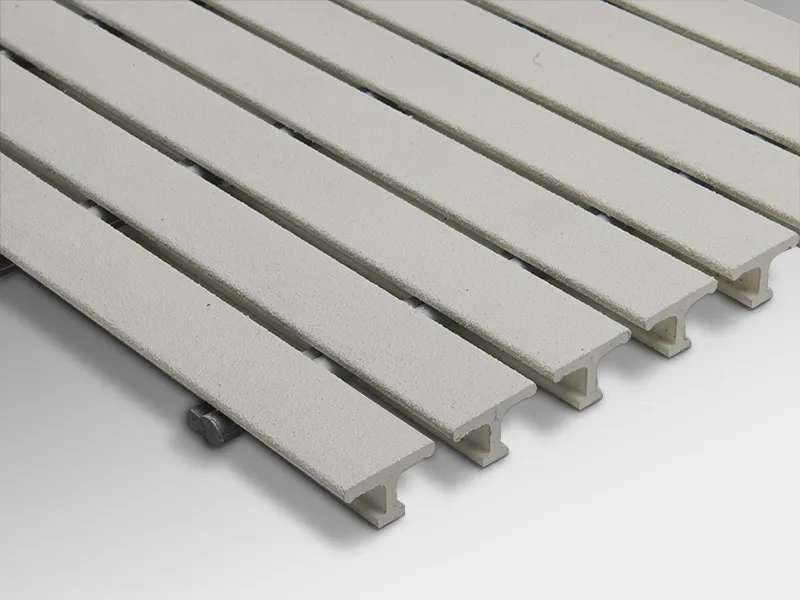
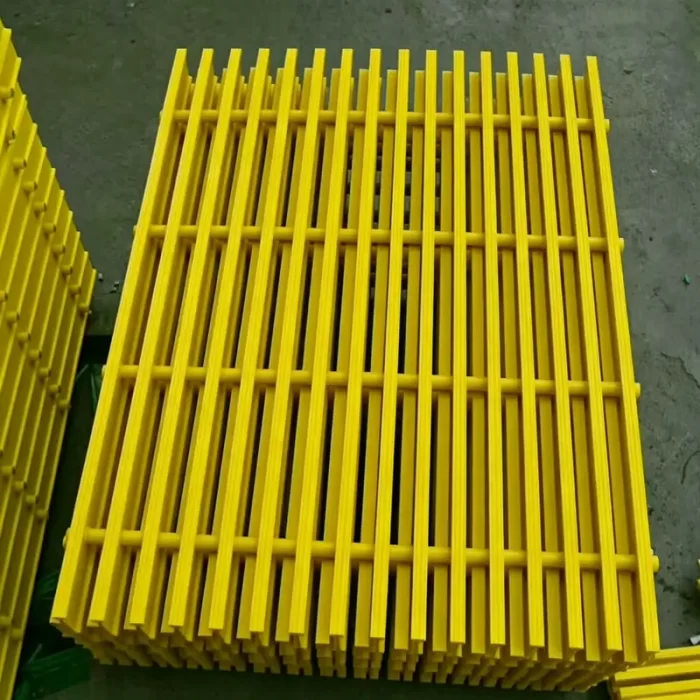
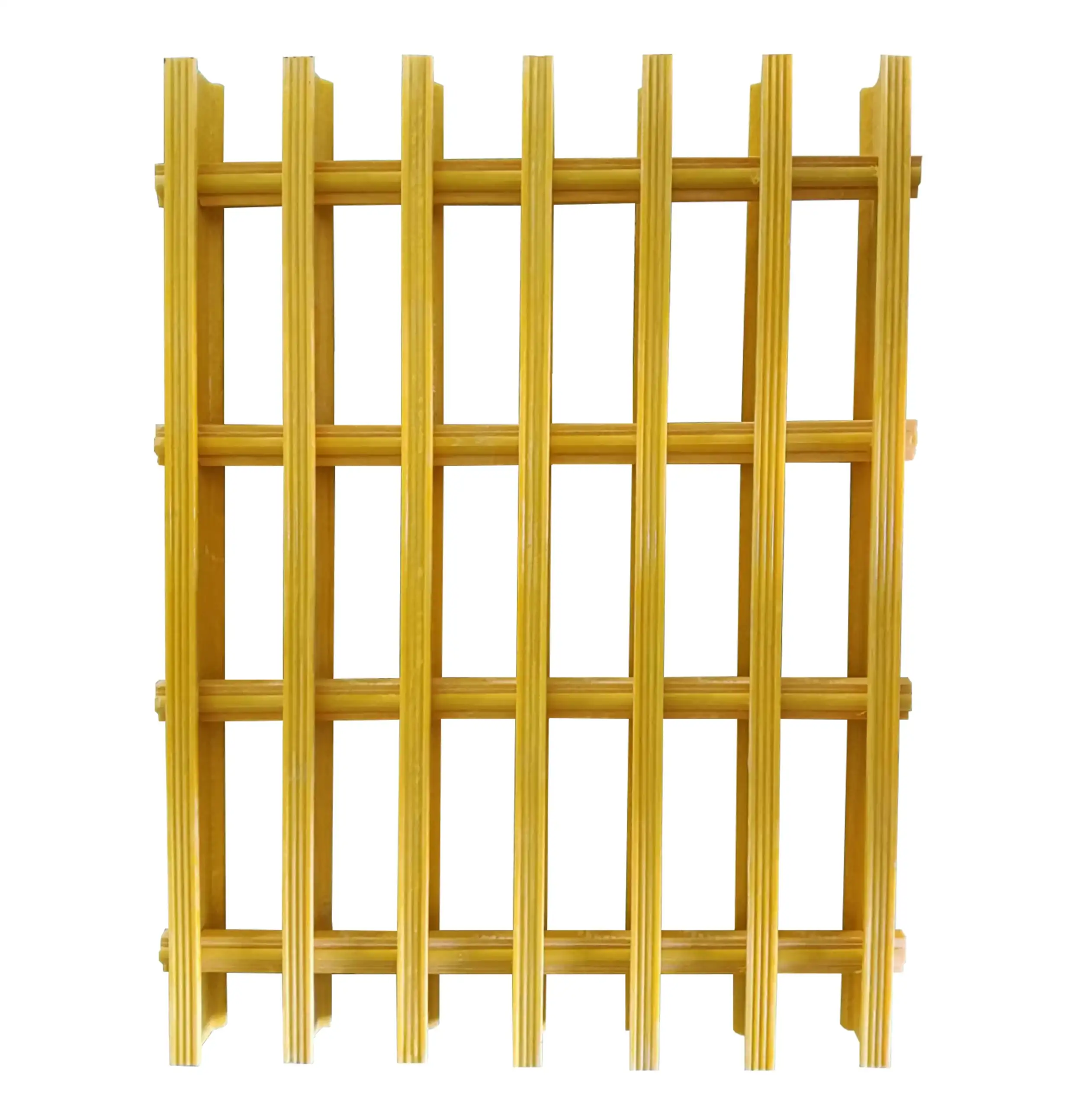
FRP grating for offshore oil and gas platforms is a pultruded composite material made from fiberglass reinforcements embedded in a thermosetting resin matrix. The pultrusion process produces continuous lengths of grating with consistent cross-sections, high strength-to-weight ratios, and exceptional dimensional stability. This engineered material is specifically formulated to withstand the harsh conditions found in offshore marine environments.
Composition and Manufacturing
Offshore-grade fiberglass grating for offshore platform applications is manufactured using E-glass or ECR-glass fibers combined with specially selected resin systems. The most common resin systems used for offshore platforms include:
- Isophthalic polyester resin — Standard grade offering good corrosion resistance for general offshore use
- Vinyl ester resin — Enhanced chemical and corrosion resistance for aggressive marine environments, preferred for splash zone and chemical processing areas
- Phenolic resin — Fire-resistant grade with low smoke emission, specifically required for enclosed platform areas and helidecks where fire safety is critical
- Epoxy resin — Maximum mechanical strength and chemical resistance for high-load structural applications
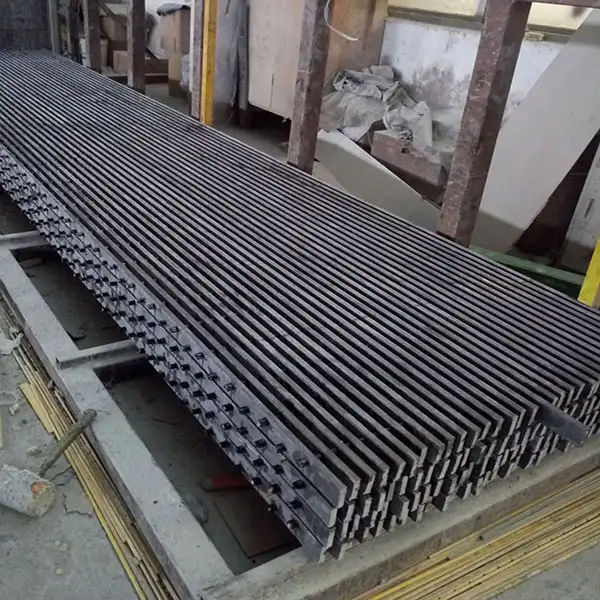
The pultrusion process pulls continuous fiberglass rovings and mats through a heated die, where they are impregnated with resin and cured into a solid profile. This creates a grating with unidirectional strength in the longitudinal direction and balanced properties in the transverse direction.
Key Properties for Marine Environments
FRP grating offshore platform specification sheets highlight several properties that make this material uniquely suited for offshore service:
- Corrosion resistance: FRP does not rust, rot, or corrode in saltwater environments, unlike steel and aluminum
- Lightweight: FRP grating weighs approximately 75% less than steel grating of equivalent strength, reducing structural loading on platforms
- High strength-to-weight ratio: Despite its light weight, FRP grating can support heavy equipment and personnel loads
- Non-conductive: FRP is electrically non-conductive and non-magnetic, ideal for electrical substations and sensitive equipment areas
- Anti-slip surface: Available with grit-coated or concave surfaces that provide excellent traction in wet and oily conditions
- UV resistance: UV-inhibited resin systems prevent degradation from prolonged sun exposure
These properties make fiberglass grating for offshore platform applications the go-to material for operators seeking long-term reliability in marine environments.
Why Is FRP Grating Preferred Over Steel on Offshore Platforms?
One of the most common questions from offshore engineers is: Why is FRP grating preferred over steel grating on offshore oil platforms? The answer lies in the fundamental differences between how these materials perform in marine environments over time.
Superior Corrosion Resistance in Harsh Offshore Conditions
The primary advantage of FRP grating for offshore oil and gas platforms is its inherent corrosion resistance. Steel grating, even when hot-dip galvanized or coated with specialized marine paints, begins to corrode within months of exposure to offshore conditions. Salt spray, high humidity, and periodic immersion in seawater create an electrochemical environment that rapidly accelerates steel corrosion. By contrast, FRP marine grating anti slip products are manufactured from non-metallic materials that simply cannot rust or corrode.
Fiberglass and resin composites are chemically inert in saltwater environments. This means that fiberglass grating for offshore platform installations maintain their full structural integrity for decades without the protective coatings, cathodic protection systems, or regular paint touch-ups that steel grating requires. The cost savings from eliminating corrosion-related maintenance are substantial over the life of a platform — often 30-50% lower total cost of ownership compared to steel.
Weight Savings and Structural Benefits
FRP grating weighs approximately one-quarter of equivalent steel grating. On an offshore platform where every ton of structural weight affects deck loading, crane capacity, and foundation design, this weight reduction is transformative. A typical steel grating panel weighing 200 kg can be replaced by an FRP panel weighing just 50 kg. This allows platform operators to:
- Reduce structural steel requirements for supporting members
- Increase payload capacity for equipment and supplies
- Simplify installation with manual handling instead of crane lifts
- Reduce transportation costs to offshore locations
- Minimize fatigue loading on platform structures
Anti-Slip Safety for Offshore Crews
Safety is paramount on offshore platforms, and frp marine grating anti slip properties provide a critical advantage. FRP grating can be manufactured with integrally molded concave surfaces or with embedded silica/grit particles that create a permanent anti-slip surface. Unlike steel grating, which becomes dangerously slippery when wet or coated with oil, FRP grating maintains its traction characteristics in all conditions. The anti-slip surface is molded into the grating during manufacturing, not applied as a coating, meaning it will not wear off over time. This permanent slip resistance significantly reduces the risk of slips, trips, and falls — which account for a large percentage of offshore workplace injuries.
FRP Grating Specifications and Safety Standards for Offshore Platforms
Offshore platforms operate under strict regulatory oversight, and all materials used must meet international safety and performance standards. FRP grating offshore platform specification requirements are defined by classification societies, regulatory bodies, and industry standards organizations. Understanding these specifications is essential for compliance and safety.
Load Ratings and Classifications
FRP grating for offshore oil and gas platforms must be designed to withstand specific load conditions as defined by standards such as:
- ASTM D3841 — Standard specification for glass-fiber-reinforced polyester plastic panels
- BS 4592 — Industrial platform, stair tread, and flooring grating standard (UK)
- NORSOK M-622 — Norwegian standard for FRP offshore applications, one of the most rigorous in the industry
- ISO 14692 — Petroleum and natural gas industries, glass-reinforced plastics piping (also referenced for grating)
- API 14G — Recommended practice for fire prevention and control on open-type offshore production platforms
- EN 12825 — European standard for raised access floors and grating
Load rating classifications typically include: Light duty (2.5 kN/m²) for inspection walkways and cable tray platforms, Medium duty (5.0 kN/m²) for general access walkways and work platforms, Heavy duty (7.5 kN/m²) for equipment access and material handling areas, and Extra heavy duty (10.0 kN/m² and above) for craneways, vehicle access, and helideck applications.
Resin Systems and Fire Ratings
Fire safety is a critical concern on offshore platforms. Fiberglass grating for offshore platform applications must meet strict fire performance criteria including flame spread, smoke generation, and toxicity. Different resin systems provide different fire ratings:
| Resin Type | Fire Rating | Typical Application |
|---|---|---|
| Isophthalic Polyester | Class 1 (BS 476 Part 7) | General outdoor walkways and decks |
| Vinyl Ester | Class 1 (BS 476 Part 7) | Chemical processing areas, splash zones |
| Phenolic | Class 0 (BS 476 Parts 6 & 7) | Enclosed areas, accommodation modules, helidecks |
| Epoxy | Class 1 (BS 476 Part 7) | High-load structural applications |
Phenolic resin systems are often mandatory for enclosed platform areas where fire safety regulations require low smoke emission and minimal flame spread. For outdoor walkways and decks, isophthalic polyester with UV inhibitors provides an excellent balance of performance and cost-effectiveness.
How to Choose the Right FRP Grating for Offshore Walkways and Decks
Selecting the right FRP grating for offshore oil and gas platforms requires careful evaluation of the specific application requirements. Walkways, decks, helidecks, and equipment platforms each have unique demands that influence grating selection. Below is a practical guide to choosing the appropriate FRP grating type for each offshore application.
Walkway Grating Selection Criteria
FRP grating offshore platform walkway installations are the most common application on offshore platforms. When specifying walkway grating, consider the following factors:
- Panel thickness: 25 mm (1 inch) is standard for general pedestrian walkways; 38 mm (1.5 inch) for heavy-traffic main walkways; 50 mm (2 inch) for equipment access routes
- Mesh size: 38×38 mm square mesh for standard walkways; 25×25 mm for areas requiring smaller openings (e.g., around delicate equipment); 50×50 mm for heavy-duty industrial walkways
- Surface finish: Grit-coated anti-slip surface for all outdoor and wet areas; concave surface for general-purpose indoor walkways
- Resin system: Isophthalic polyester for general outdoor use; vinyl ester for chemical processing zones; phenolic for enclosed walkways
- Load rating: Medium duty (5.0 kN/m²) for personnel walkways; heavy duty (7.5 kN/m²) for main access routes carrying tools and equipment
For fiberglass grating for offshore platform walkways, we recommend specifying a minimum 25 mm thick grating with grit-coated surface and isophthalic polyester resin for standard conditions, upgrading to 38 mm thick with vinyl ester resin for areas exposed to chemicals or frequent tool traffic.
Deck Grating for Oil Rigs and Helidecks
FRP grating for oil rig deck applications face more demanding conditions than walkways. Deck grating must support heavier loads, withstand impact from dropped tools and equipment, and provide reliable anti-slip performance in areas where oil and chemical spills are common.
Key specifications for oil rig deck grating include:
- Thickness: 38 mm minimum, with 50 mm recommended for primary deck areas
- Resin: Vinyl ester for superior chemical resistance in wellhead areas and production decks
- Anti-slip: Heavy-duty grit coating with aluminum oxide or silicon carbide particles embedded in the surface
- Color: Safety yellow or orange for high-visibility edges and walkway boundaries; industrial gray for general deck areas
For helideck applications, phenolic resin FRP grating is typically required due to fire safety regulations. Helideck grating must be non-sparking, fire-resistant with low smoke emission, and capable of supporting helicopter landing loads (often exceeding 10 kN/m²). Special helideck grating profiles with drainage slots and integral tie-down points are available for this purpose.
Installation Guide for FRP Grating on Offshore Platforms
Proper installation is critical to the long-term performance of FRP grating for offshore oil and gas platforms. While FRP grating is significantly lighter than steel and easier to handle, it requires different installation techniques that account for the material's unique properties. This section provides a comprehensive installation guide.
Mounting Systems and Fixing Methods
FRP grating on offshore platforms is secured using several mounting systems, each suited to different applications:
- FRP clips and hold-down brackets: Non-corrosive clips made from the same composite material as the grating provide secure fixing without introducing metal fasteners. These are the preferred method for most offshore installations as they maintain corrosion resistance across the entire assembly.
- Stainless steel spring clips: 316L stainless steel clips offer a positive mechanical lock and are suitable for areas with high vibration, such as near machinery. The stainless steel must be marine grade to resist pitting corrosion.
- Countersunk bolt-down system: For heavy-duty applications, grating panels can be drilled and countersunk to accept bolts. All bolt hardware must be 316L stainless steel or titanium.
- Interlocking panel systems: Some offshore-specific FRP grating products feature integral interlocking edges that connect adjacent panels without separate fasteners. These are ideal for large deck areas.
Regardless of the mounting system used, FRP grating offshore platform walkway installations should always follow the manufacturer's spacing recommendations for support members. Typical support spacing ranges from 600 mm to 900 mm depending on panel thickness and load rating.
Best Practices for Offshore Installation
When installing fiberglass grating for offshore platform applications, follow these best practices to ensure optimal performance:
- Drilling: Use carbide-tipped drill bits and avoid impact drilling. Drill at low speed (500-1000 RPM) to prevent delamination. Ensure holes are at least 6 mm from panel edges.
- Cutting: Use diamond-tipped blades or abrasive cut-off wheels. Avoid guillotine shears that can cause edge cracking. Cut panels with the bearing bars oriented properly for load distribution.
- Expansion gaps: Leave a 3-5 mm gap between adjacent panels to accommodate thermal expansion. FRP has a higher coefficient of thermal expansion than steel.
- Support structure: Ensure all bearing bars are fully supported on the structural framework. Unsupported overhangs should not exceed 25 mm.
- Fall protection: Install grating with temporary fall protection in place. Use safety netting or edge protection until panels are secured.
- Torque settings: Do not overtighten fasteners. FRP grating compresses under excessive clamping force. Use torque-limiting tools set to the manufacturer's specification (typically 10-15 Nm for M8 bolts).
Proper installation ensures your FRP grating for oil rig deck installations will provide decades of safe, reliable service with minimal maintenance.
Lifespan and Maintenance of FRP Grating on Oil Rigs
Understanding the expected lifespan and maintenance requirements of FRP grating for offshore oil and gas platforms is essential for lifecycle cost analysis and maintenance planning. When properly selected and installed, FRP grating offers exceptional longevity in offshore environments.
Expected Service Life
The lifespan of FRP grating on offshore oil rigs typically ranges from 20 to 30 years, depending on the resin system, exposure conditions, and maintenance practices. For comparison, galvanized steel grating in offshore service often requires replacement within 5-10 years due to corrosion, and aluminum grating may last 10-15 years before pitting and fatigue become problematic.
Several factors influence the service life of fiberglass grating for offshore platform installations:
- Resin system: Vinyl ester and phenolic resin systems offer the longest service life in aggressive offshore conditions, often exceeding 25 years. Isophthalic polyester systems typically provide 15-20 years of service in outdoor marine environments.
- UV exposure: Continuous direct sunlight can degrade unprotected resin over time. UV-inhibited resin systems and gel coats extend outdoor service life significantly. Areas shaded by platform superstructure experience less UV degradation.
- Chemical exposure: FRP grating in production deck areas exposed to hydrocarbons, drilling muds, and treatment chemicals requires vinyl ester or epoxy resin systems for maximum chemical resistance. With proper resin selection, chemical attack is minimal.
- Mechanical wear: High-traffic walkways and areas where tools and equipment are dragged across the surface experience gradual wear of the anti-slip surface. This is cosmetic in most cases and does not affect structural integrity.
Most manufacturers offer warranties of 10-15 years for offshore-grade FRP grating, with actual service life typically exceeding warranty periods by a significant margin.
Routine Maintenance Requirements
One of the strongest value propositions of FRP grating for offshore oil and gas platforms is its minimal maintenance requirement. Unlike steel grating, which demands regular painting, galvanizing repair, and corrosion inspection, FRP grating maintenance is limited to cleaning and periodic inspection. Recommended maintenance practices include:
- Regular washing: Hose down grating with fresh water to remove salt deposits, particularly in splash zone areas. This simple practice prevents salt crystal formation that can concentrate sunlight and cause localized heating.
- Visual inspection: Conduct quarterly visual inspections for signs of mechanical damage, loose fasteners, or surface wear. Pay attention to high-traffic areas and locations near vibrating equipment.
- Fastener check: Inspect and retighten mounting clips and fasteners annually. Thermal cycling and platform vibration can cause gradual loosening.
- Load capacity verification: After any significant modification or impact event, verify that the grating remains within its rated load capacity. FRP grating that has been overloaded may show visible cracking or deformation.
- Anti-slip refresh: In areas of extremely heavy traffic, the grit-coated surface may eventually wear smooth. Recoating with anti-slip paint or applying adhesive grit strips can restore traction. This is typically needed only after 10+ years of service.
The low maintenance requirements of FRP marine grating translate directly into reduced operating costs, fewer crew hours spent on maintenance tasks, and less platform downtime for material replacement.
Conclusion
FRP grating for offshore oil and gas platforms has proven itself as the superior material choice for marine environments. Its combination of corrosion resistance, light weight, high strength, anti-slip safety, and minimal maintenance makes it the preferred solution for offshore walkways, decks, helidecks, and platform access systems worldwide.
When selecting FRP grating for your offshore installation, consider the specific requirements of each application area — including load ratings, resin systems, fire safety classifications, and anti-slip surface treatments. Partner with a reputable manufacturer who can provide certified materials meeting international standards such as NORSOK M-622, BS 4592, and ASTM D3841.
Whether you are building a new platform or upgrading an existing one, fiberglass grating for offshore platform applications delivers the long-term reliability and cost-effectiveness that offshore operators demand. With proper specification, installation, and minimal routine maintenance, your FRP grating investment will provide safe, reliable service for 20 years or more in even the harshest offshore environments.
For detailed specifications, technical data sheets, or a quote for your offshore project, contact our engineering team. We specialize in providing FRP grating solutions for the oil and gas industry and can help you select the optimal grating configuration for your specific platform requirements.