Introduction
Chemical processing facilities demand flooring solutions...
Introduction
Pultruded grating for chemical plants is the leading solution for corrosion-resistant flooring in industrial environments where chemical exposure, moisture, and heavy loads are daily realities. Chemical plants, refineries, processing facilities, and manufacturing plants all face the challenge of finding floor materials that can withstand aggressive chemical attack while providing safe, durable walkways and platforms for decades of service.
Traditional materials like steel, aluminum, and wood simply cannot withstand these conditions over the long term. Steel corrodes rapidly when exposed to chemical spills and humid atmospheres. Wood rots and deteriorates. Even specialty metals require expensive coatings and frequent maintenance. This is why plant engineers and facility managers are increasingly turning to FRP pultruded grating for chemical plants as the preferred flooring solution, offering exceptional chemical resistance at a fraction of the weight of steel.
Pultruded grating for chemical plants offers a unique combination of properties that make it ideal for corrosive environments. Made from fiberglass reinforcements embedded in a high-performance resin matrix, this composite material delivers exceptional chemical resistance, high strength-to-weight ratio, anti-slip safety, and virtually maintenance-free service life. Unlike traditional materials, pultruded FRP grating for the chemical industry does not rust, rot, or degrade when exposed to harsh chemicals and environmental conditions.
This comprehensive guide covers everything you need to know about using pultruded grating for chemical plants. We will explore the different types of FRP grating available, how pultruded grating resists chemical attack, load capacities for industrial walkways, proper installation methods for chemical processing areas, and expected lifespan in corrosive conditions. Whether you are an engineer specifying materials for a new facility, a maintenance manager upgrading existing flooring, or a procurement professional evaluating suppliers, this guide provides the technical depth and practical insights required to make informed decisions about fiberglass floor plates for chemical plant applications.
Chemical Plant Flooring Challenges: Why Traditional Materials Fail
Chemical plant flooring must withstand conditions that would destroy conventional building materials within months. Understanding these challenges is essential for appreciating why pultruded grating for chemical plants has become the material of choice for industrial flooring in corrosive environments.
Chemical Attack and Corrosion
The most significant challenge in chemical plant flooring is constant exposure to corrosive substances. Floors in chemical processing areas are routinely exposed to sulfuric acid, hydrochloric acid, sodium hydroxide, organic solvents, chlorine compounds, and a wide range of other aggressive chemicals. Steel grating, even when hot-dip galvanized, begins to corrode within weeks or months of exposure to acid spills. The galvanized coating is consumed by chemical attack, leaving the underlying steel vulnerable to rapid corrosion that compromises structural integrity. Vinyl ester FRP grating corrosive environment applications solve this problem entirely, as the resin matrix is chemically inert against most industrial chemicals.
Moisture and Humidity
Chemical plants often operate in high-humidity environments with frequent washdowns, steam releases, and condensation. This constant moisture accelerates corrosion of metal flooring materials and promotes rot in wooden surfaces. FRP composites are impervious to moisture absorption — the resin fully encapsulates the glass fibers, preventing water ingress and the associated degradation. This makes pultruded FRP grating for the chemical industry an excellent choice for wet processing areas, washdown stations, and outdoor chemical storage yards.
Thermal Cycling and Temperature Extremes
Chemical processes often involve extreme temperatures, from cryogenic conditions to high-heat reactions. Flooring materials must withstand thermal expansion and contraction without cracking, warping, or losing structural integrity. FRP grating has a coefficient of thermal expansion similar to steel, allowing it to perform reliably across a wide temperature range when properly installed with appropriate expansion gaps.
Slip Hazards in Chemical Environments
Chemical spills create extremely slippery conditions on smooth flooring surfaces. Water, oil, chemical residues, and process fluids combine to create serious slip-and-fall hazards. Fiberglass floor plates for chemical plant applications are manufactured with integral anti-slip surfaces — either grit-coated or molded concave patterns — that provide reliable traction even when wet or contaminated with chemical residues.
Structural Loading and Impact
Chemical plant floors must support heavy equipment, piping, storage tanks, forklift traffic, and personnel. Any flooring solution must provide adequate load capacity while maintaining its structural properties over decades of service. Pultruded grating excels in this regard, offering high strength-to-weight ratios that allow it to support concentrated loads of several thousand pounds per square foot without permanent deformation.
What Is FRP Pultruded Grating for Chemical Plants?
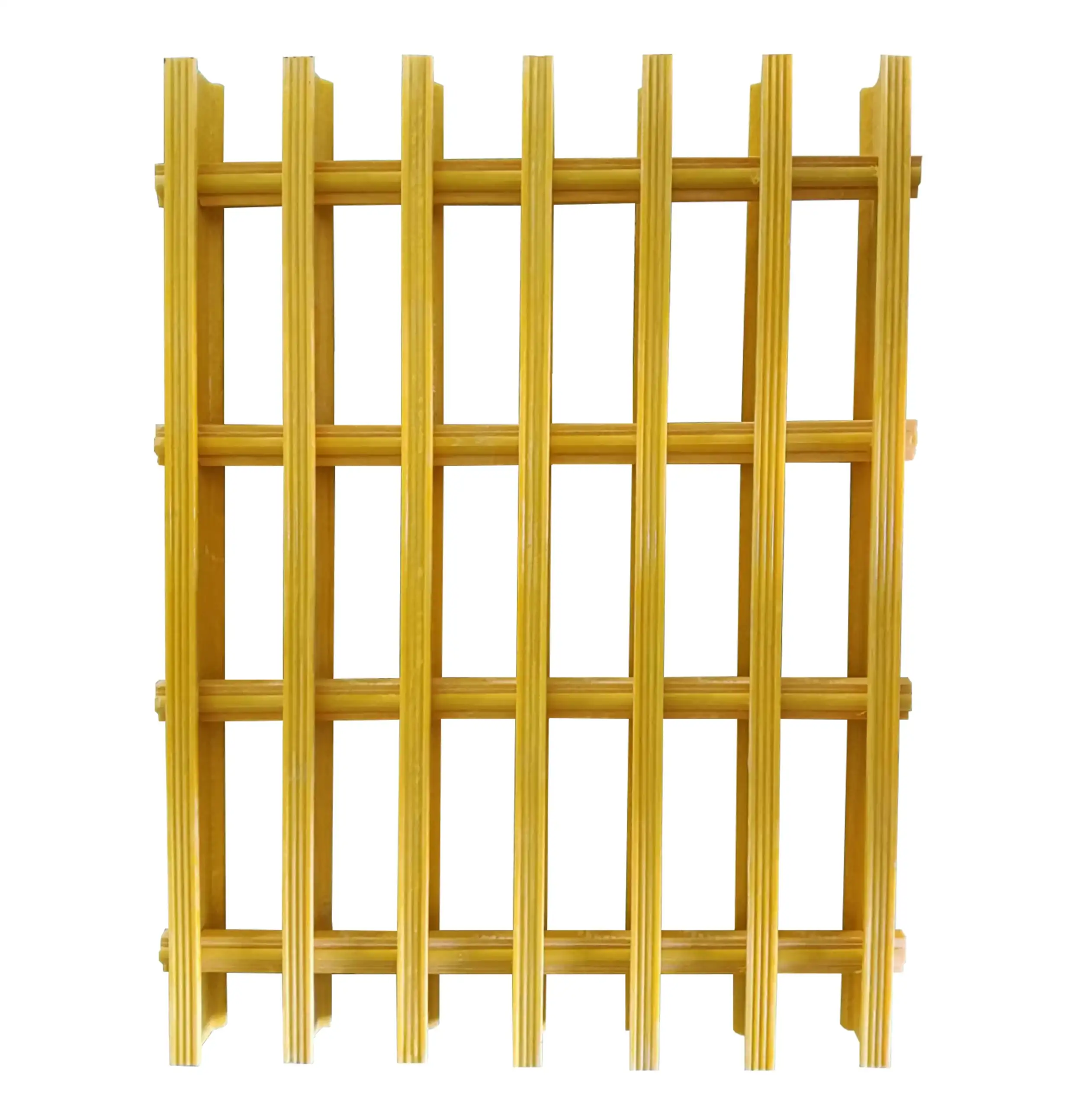
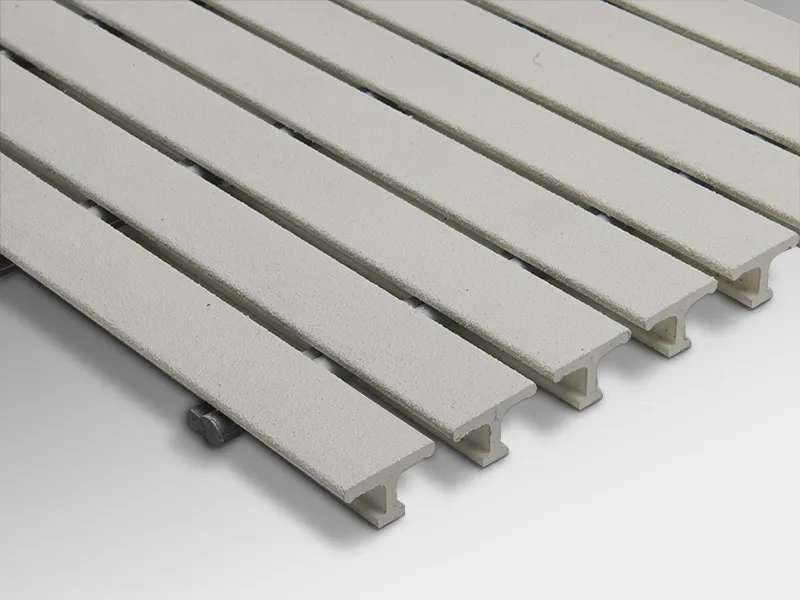
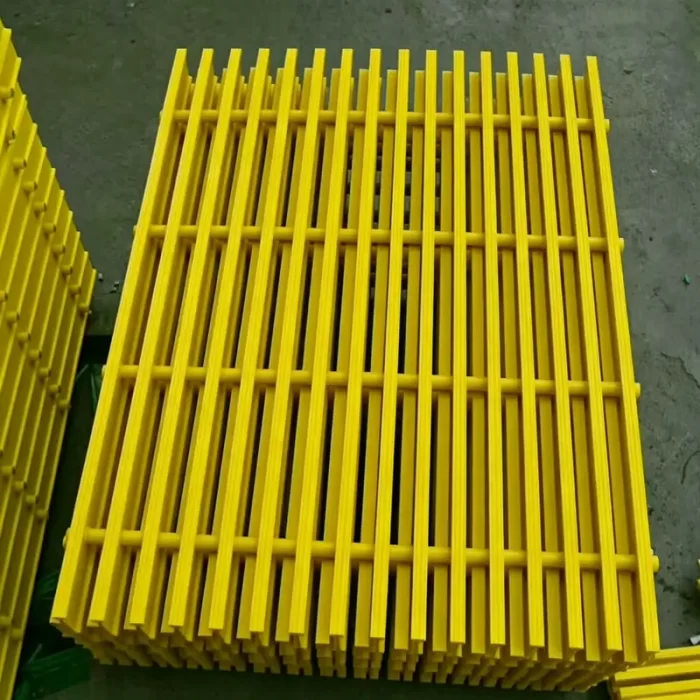
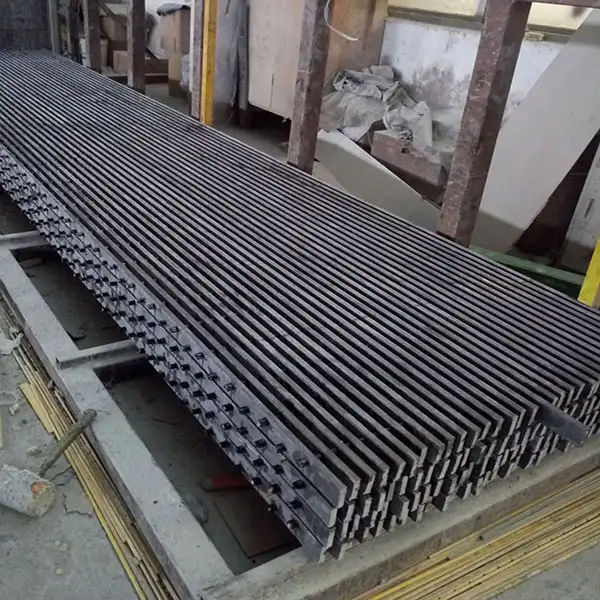
FRP pultruded grating for chemical plants is a composite material manufactured through the pultrusion process, where continuous fiberglass rovings and mats are pulled through a resin bath and then through a heated steel die that shapes and cures the material into a solid profile. These profiles are assembled into grating panels that provide robust, corrosion-resistant flooring for industrial environments. Understanding the composition and properties of this material is essential for specifying the right product for chemical plant applications.
Composition and Resin Systems
The chemical resistance of pultruded grating for chemical plants is determined primarily by the resin system used in manufacturing. Different resins offer different levels of chemical resistance, and selecting the appropriate resin is critical for achieving the desired service life in a specific chemical environment.
Vinyl ester resin is the most commonly specified resin system for chemical plant applications. Vinyl ester FRP grating corrosive environment applications offer exceptional resistance to acids, alkalis, bleaches, and organic solvents. The molecular structure of vinyl ester resin provides superior chemical resistance compared to standard polyester resins, making it the preferred choice for chemical processing areas, battery rooms, and wastewater treatment facilities. Vinyl ester resin FRP for chemical plant installations typically provides 2-3 times longer service life than standard polyester systems in aggressive chemical environments.
Isophthalic polyester resin offers good chemical resistance at a lower cost point, suitable for areas with moderate chemical exposure such as general plant walkways, inspection platforms, and outdoor areas not subject to direct chemical contact.
Epoxy resin systems provide the highest mechanical strength and excellent chemical resistance, though at a higher cost. They are typically specified for specialized applications requiring maximum structural performance combined with chemical resistance.
Phenolic resin is selected primarily for fire-critical applications where low smoke emission and flame spread are required. It offers moderate chemical resistance and is commonly used in enclosed chemical processing areas with strict fire safety regulations.
Key Properties for Chemical Environments
Pultruded FRP grating for chemical industry applications offer a distinctive set of properties that make it uniquely suited for corrosive environments:
- Chemical resistance: The resin matrix forms a chemically inert barrier that protects the glass fiber reinforcement. Unlike steel, which corrodes through electrochemical reactions, FRP is non-metallic and inherently resistant to chemical attack across a broad pH range (pH 1-14 depending on resin system).
- Lightweight: Fiberglass floor plates for chemical plant weigh approximately 75% less than steel grating of equivalent strength, reducing structural loading on support beams and simplifying installation.
- High strength-to-weight ratio: Pultruded grating offers exceptional load-bearing capacity relative to its weight, with continuous glass fiber reinforcement providing maximum strength in the load-bearing direction.
- Non-conductive: FRP is electrically non-conductive and non-sparking, making it safe for use in areas with flammable chemicals or sensitive electronic equipment.
- Anti-slip surface: Available with integrally molded grit coatings or concave surface patterns that provide reliable traction even when contaminated with chemical spills.
- Low maintenance: Does not require painting, coating, galvanizing, or any other protective treatments. Simply hose down to clean.
- UV resistance: UV-inhibited resin systems prevent degradation from sunlight exposure in outdoor chemical storage and processing areas.
Types of FRP Grating Best for Chemical Plant Flooring
When selecting FRP grating for chemical plant flooring, several product types are available, each with specific advantages depending on the application requirements. Understanding the differences between these types is essential for choosing the right solution. Below we examine the main options and their suitability for various chemical plant environments.
Pultruded FRP Grating for Chemical Industry Flooring
Pultruded grating for chemical plants is the most widely used type for industrial chemical environments. The pultrusion process produces grating with continuous fiber orientation, delivering the highest strength-to-weight ratio of any FRP grating type. Key advantages for chemical plants include:
- Exceptional longitudinal strength for long-span applications up to 8-10 feet without intermediate supports
- Customizable bearing bar depths (1 inch, 1.5 inch, 2 inch) to match load requirements
- Available with vinyl ester or epoxy resin systems for maximum chemical resistance
- Grit-coated anti-slip surface options for wet and chemically contaminated areas
- Can be manufactured in custom lengths up to 24 feet, reducing waste and joint requirements
- Lightweight design simplifies installation and reduces structural loading
Pultruded FRP grating for the chemical industry is the preferred choice for main plant walkways, equipment platforms, mezzanine flooring, trench covers, and heavy-duty industrial flooring applications where long spans and high load capacity are required.
Vinyl Ester FRP Grating Corrosive Environment
Vinyl ester FRP grating corrosive environment applications represent the gold standard for chemical plant flooring where aggressive chemical exposure is expected. The vinyl ester resin system provides superior resistance to a broad spectrum of chemicals, including:
- Acids: Sulfuric acid (up to 70% concentration), hydrochloric acid, nitric acid, phosphoric acid
- Alkalis: Sodium hydroxide (caustic soda), potassium hydroxide, calcium hydroxide
- Solvents: Acetone, methanol, ethanol, toluene, xylene, MEK
- Oxidizing agents: Sodium hypochlorite (bleach), hydrogen peroxide, chlorine solutions
- Hydrocarbons: Crude oil, gasoline, diesel, jet fuel, lubricating oils
Vinyl ester resin FRP for chemical plant applications is typically specified for chemical processing areas, acid storage dikes, battery rooms, electroplating facilities, wastewater treatment plants, and any location where regular chemical contact is expected. The additional cost of vinyl ester resin (typically 15-30% more than standard polyester) is justified by 2-3 times longer service life in aggressive chemical environments.
Molded FRP Grating for Chemical Containment Areas
Molded (compression-molded) FRP grating offers distinct advantages for certain chemical plant applications. The monolithic one-piece construction with no joints or seams makes molded grating ideal for chemical containment areas, spill containment dikes, and secondary containment flooring. The integrally molded diamond pattern provides inherent slip resistance, and the random fiber orientation offers balanced bidirectional strength. Molded grating is typically used for:
- Chemical storage tank containment dikes and berms
- Battery charging rooms and acid handling areas
- Food and beverage processing areas requiring frequent washdown
- Light to moderate pedestrian walkways and inspection platforms
- Areas requiring color-coded safety zones (available in yellow, orange, gray, and green)
Comparison Table: Pultruded vs Molded Grating for Chemical Plants
| Feature | Pultruded Grating | Molded Grating |
|---|---|---|
| Chemical Resistance | Excellent (with vinyl ester resin) | Excellent (with vinyl ester resin) |
| Longitudinal Strength | Very High | Moderate |
| Weight (per sq ft, 1 inch) | 3-5 lbs | 5-8 lbs |
| Span Capacity | Up to 8-10 ft unsupported | Up to 3-4 ft unsupported |
| Anti-Slip Surface | Grit coating (applied) | Integral diamond pattern |
| Custom Lengths | Yes (up to 24 ft) | Limited by mold size (4x8 or 4x12 ft) |
| Best For | Walkways, platforms, heavy loads, long spans | Containment dikes, light pedestrian areas, wet environments |
For most chemical plant flooring applications, pultruded grating for chemical plants with vinyl ester resin offers the best balance of performance, longevity, and cost-effectiveness. The combination of high strength, chemical resistance, and long-span capability makes it the most versatile choice for the diverse flooring requirements found in chemical processing facilities.
How FRP Pultruded Grating Resists Chemical Corrosion in Industrial Environments
Understanding the corrosion resistance mechanism of pultruded grating for chemical plants is essential for engineers and plant managers who need to specify flooring that will perform reliably in aggressive chemical environments. The corrosion resistance of FRP grating is not a surface treatment or coating — it is an inherent property of the material itself, arising from its fundamental composition and structure.
The Role of the Resin Matrix
In FRP pultruded grating for chemical plants, the resin matrix serves as the primary barrier against chemical attack. The thermosetting resin (polyester, vinyl ester, or epoxy) forms a dense, cross-linked polymer network that is chemically inert against most industrial chemicals. When chemical species come into contact with the grating surface, they encounter this resin barrier first. Because the resin is a cross-linked thermoset polymer, it does not dissolve, soften, or react chemically with most acids, alkalis, or solvents.
Vinyl ester resin FRP for chemical plant applications offers particularly outstanding chemical resistance due to the molecular structure of the resin. Vinyl ester resins contain fewer ester groups in their molecular backbone compared to polyester resins, making them more resistant to hydrolysis and chemical attack. The resin also forms strong bonds with the glass fiber reinforcement, preventing chemical migration along the fiber-resin interface — a common failure mode in less sophisticated composite materials.
Protection of Glass Fiber Reinforcement
The glass fibers that provide mechanical strength to FRP grating are susceptible to attack by strong acids and alkalis if exposed. In pultruded FRP grating for the chemical industry, the resin matrix fully encapsulates the glass fibers, preventing direct chemical contact. As long as the resin barrier remains intact, the glass fibers are completely protected from chemical attack. The pultrusion process is particularly effective at achieving complete fiber wet-out, meaning every individual glass filament is surrounded by resin. This is why proper manufacturing quality is critical for chemical service — incomplete wet-out or voids in the composite can create pathways for chemical ingress that compromise the material's long-term performance.
Chemical Resistance by Resin Type
Different resin systems offer different levels of chemical resistance. The table below summarizes the chemical resistance characteristics of the most common resin systems used in pultruded grating for chemical plants:
| Chemical Exposure | Polyester Resin | Vinyl Ester Resin | Epoxy Resin |
|---|---|---|---|
| Sulfuric Acid (30%) | Good | Excellent | Excellent |
| Hydrochloric Acid (10%) | Good | Excellent | Excellent |
| Sodium Hydroxide (25%) | Fair | Excellent | Excellent |
| Sodium Hypochlorite (15%) | Fair | Excellent | Good |
| Acetone | Poor | Good | Excellent |
| Toluene | Fair | Good | Excellent |
| Methanol | Fair | Good | Excellent |
| Hydrogen Peroxide (30%) | Fair | Excellent | Good |
Why FRP Does Not Suffer Electrochemical Corrosion
Unlike metals, which corrode through electrochemical reactions that require an electrolyte (moisture) and oxygen, FRP composites are electrically non-conductive and contain no metallic components. This means that the fundamental corrosion mechanism that destroys steel, aluminum, and even stainless steel in chemical environments simply does not apply to FRP. There are no anodic or cathodic sites on the surface, no galvanic cells to drive corrosion reactions, and no metal ions to be leached out by chemical attack. This fundamental difference explains why fiberglass floor plates for chemical plant applications can last 20-30 years in environments where steel grating fails within 2-5 years.
The Corrosion Barrier Layer
Many vinyl ester FRP grating corrosive environment products feature a specialized corrosion barrier layer — a resin-rich surface layer with additional chemical resistance, typically 0.5-1.0 mm thick and reinforced with a surface veil (a thin, chemically resistant synthetic fiber mat). This barrier provides a first line of defense against chemical attack and can significantly extend service life in the most aggressive environments. For the harshest chemical exposures, vinyl ester FRP grating corrosive environment grades with a reinforced corrosion barrier offer the maximum protection available in any industrial flooring material. For chemical plants requiring maximum corrosion defense, specifying vinyl ester FRP grating corrosive environment grades with an integrated corrosion barrier is the recommended approach.
Load Capacity of Pultruded Grating for Chemical Plant Walkways
One of the most common questions engineers ask when specifying pultruded grating for chemical plants is: what load capacity does it provide for walkways and platforms? The answer depends on several factors including the grating thickness, bearing bar configuration, resin system, and support spacing. Understanding these variables is essential for designing safe and code-compliant chemical plant walkways.
Load Rating Classifications
FRP pultruded grating for chemical plants is available in multiple load ratings to suit different application requirements. Standard load classifications for chemical plant walkways include:
- Light Duty (2.5 kN/m² / 50 psf): Suitable for inspection walkways, cable tray platforms, and areas with minimal foot traffic. Typically uses 1-inch (25 mm) thick grating with standard bearing bar spacing.
- Medium Duty (5.0 kN/m² / 100 psf): Suitable for general chemical plant access walkways, maintenance platforms, and personnel access routes. Typically uses 1.5-inch (38 mm) thick grating.
- Heavy Duty (7.5 kN/m² / 150 psf): Suitable for main process area walkways, equipment access platforms, and areas with tool and light equipment traffic. Typically uses 1.5-inch to 2-inch (38-50 mm) thick grating.
- Extra Heavy Duty (10.0+ kN/m² / 200+ psf): Suitable for forklift access routes, heavy equipment platforms, and material handling areas. Typically uses 2-inch (50 mm) or thicker grating with reduced bearing bar spacing.
Factors Affecting Load Capacity
The load capacity of pultruded FRP grating for the chemical industry is influenced by several design parameters:
- Bearing bar depth: Deeper bearing bars provide greater moment of inertia and higher load capacity. A 2-inch deep bar can support approximately 3-4 times the load of a 1-inch bar at the same span.
- Bearing bar spacing: Closer center-to-center spacing of bearing bars distributes concentrated loads across more bars, increasing overall panel capacity. Standard spacing options include 1.5-inch and 2-inch centers.
- Span between supports: Load capacity decreases exponentially as span length increases. Doubling the span reduces load capacity by approximately 75%.
- Resin system: While all resin systems provide similar short-term mechanical properties, vinyl ester and epoxy resins maintain their strength better than polyester in elevated-temperature chemical environments.
- Glass content: Higher glass-to-resin ratios (typically 65-75% glass by weight in pultruded grating) provide greater stiffness and load capacity.
Typical Load Capacities for Chemical Plant Walkways
The following table shows typical load capacities for standard pultruded grating for chemical plants configurations commonly used in chemical plant walkways:
| Grating Thickness | Support Span | Uniform Load Capacity | Concentrated Load Capacity |
|---|---|---|---|
| 1 inch (25 mm) | 24 inches | 250 psf | 1,200 lbs |
| 1 inch (25 mm) | 36 inches | 110 psf | 600 lbs |
| 1.5 inch (38 mm) | 24 inches | 500 psf | 2,500 lbs |
| 1.5 inch (38 mm) | 36 inches | 220 psf | 1,100 lbs |
| 1.5 inch (38 mm) | 48 inches | 120 psf | 600 lbs |
| 2 inch (50 mm) | 36 inches | 500 psf | 3,200 lbs |
| 2 inch (50 mm) | 48 inches | 280 psf | 1,600 lbs |
| 2 inch (50 mm) | 60 inches | 180 psf | 900 lbs |
Note: Values are approximate and based on standard pultruded grating with 2-inch bearing bar spacing and isophthalic polyester resin. Actual capacities should be verified with manufacturer-provided engineering data for specific products.
Deflection Limits for Chemical Plant Walkways
In addition to load capacity, deflection is a critical design consideration for fiberglass floor plates for chemical plant walkways. Excessive deflection can cause discomfort for personnel, damage to equipment mounted on the grating, and potential fatigue issues over time. Industry standards typically limit deflection to L/200 (span divided by 200) for pedestrian walkways and L/150 for industrial platform applications. For a 36-inch span walkway, this means maximum deflection should not exceed 0.18 inches under design load.
Safety Factors and Code Compliance
Pultruded FRP grating for the chemical industry should be specified with appropriate safety factors based on the application and relevant building codes. A minimum safety factor of 2.0 against ultimate failure is standard for pedestrian walkways, while heavy-duty industrial platforms often require a safety factor of 3.0 or higher. When specifying grating for chemical plant walkways, consult the manufacturer's load tables and engineering data, and consider having the installation reviewed by a structural engineer experienced with FRP composite materials.
Installation Guide for Pultruded Grating in Chemical Processing Areas
Proper installation of pultruded grating for chemical plants is critical for achieving the long service life and reliable performance that the material is capable of delivering. While FRP grating is significantly lighter and easier to handle than steel, it requires different installation techniques that account for the material's unique properties. This section provides a practical guide for installing pultruded grating in chemical processing areas.
Pre-Installation Considerations
Before beginning installation of FRP pultruded grating for chemical plants, several factors should be evaluated to ensure a successful outcome:
- Support structure condition: Verify that all support beams and frames are properly aligned, level, and capable of supporting the design loads. Support spacing should not exceed the manufacturer's recommendations for the selected grating type and load rating.
- Material handling: FRP grating panels should be stored flat on a level surface, protected from direct sunlight if stored outdoors. Panels can be lifted manually by two workers — a 4×8 ft panel of 1.5-inch pultruded grating weighs approximately 120-160 lbs.
- Safety equipment: Workers should wear appropriate PPE including safety glasses, gloves, and dust masks when cutting or drilling FRP grating. The composite dust can be irritating to skin and respiratory tract.
- Chemical exposure assessment: Verify that the grating's resin system is compatible with the specific chemicals present in the installation area. Review the manufacturer's chemical resistance guide before proceeding.
Cutting and Fabrication
Pultruded FRP grating for the chemical industry can be cut and modified using standard tools with appropriate blade selections:
- Cutting: Use a circular saw with a diamond-tipped or carbide-tipped blade (minimum 40 teeth). Cut at moderate speed to avoid generating excessive heat that could melt the resin. For straight cuts, clamp a straight edge guide to the panel.
- Drilling: Use carbide-tipped drill bits at low speed (500-1000 RPM). Avoid high-speed drilling that can cause localized heating and resin melting around the hole. Holes should be at least 6 mm from panel edges to prevent edge splitting.
- Edge finishing: After cutting, seal any exposed cut edges with compatible resin or a manufacturer-recommended edge sealant. This is particularly important for vinyl ester resin FRP for chemical plant installations where cut edges could provide pathways for chemical ingress.
- Notching: For cuts around pipes, columns, or equipment, use a jigsaw with a fine-tooth carbide blade. Cut slowly and support the panel on both sides of the cut line.
Mounting Systems for Chemical Plant Environments
Selecting the right mounting system is essential for the long-term performance of pultruded grating for chemical plants. The mounting hardware must be as corrosion-resistant as the grating itself to avoid creating weak points in the installation:
- FRP clips and hold-down brackets: These non-corrosive clips made from pultruded FRP or injection-molded composite are the preferred mounting method. They provide secure attachment without introducing metal components that could corrode. FRP clips are available in various configurations including snap-on, bolt-down, and saddle types.
- Stainless steel clips: 316L stainless steel clips offer excellent corrosion resistance and can be used in areas where chemical exposure is less severe. The stainless steel must be fully grade 316L (not 304) to resist pitting in chloride-containing chemical environments.
- Bolted connections: When bolts are required, use 316L stainless steel or titanium hardware with large-diameter washers to distribute clamping forces. Nylon insert lock nuts prevent loosening from vibration. Do not overtighten — FRP compresses under excessive clamping force, which can cause localized stress and premature failure.
Installation Best Practices for Chemical Processing Areas
Follow these best practices when installing fiberglass floor plates for chemical plant applications:
- Support bar orientation: Ensure that the bearing bars run perpendicular to the support structure. All bearing bars must be fully supported with no overhang exceeding 25 mm (1 inch).
- Expansion gaps: Leave a 3-5 mm gap between adjacent panels to accommodate thermal expansion. FRP has a coefficient of thermal expansion approximately 2-3 times that of steel, so proper gap management is essential in areas with significant temperature variation.
- Anti-slip surface protection: Protect the grit-coated surface during installation by placing protective mats or plywood over completed sections when workers need to walk on them during construction. Heavy traffic during installation can damage the anti-slip surface before the installation is complete.
- Sequencing: Install grating from the edges toward the center when possible, allowing workers to always work from a safe, installed surface. Use temporary bridging or safety netting where gaps exist.
- Fall protection: Comply with all applicable fall protection regulations. Chemical plant walkways may be elevated, and proper safety measures must be in place during installation.
Post-Installation Inspection
After installation of pultruded grating for chemical plants is complete, conduct a thorough inspection:
- Verify that all panels are securely fastened with the specified number and type of clips or fasteners
- Check that expansion gaps are uniform and unobstructed
- Confirm that cut edges have been properly sealed
- Test for any loose panels or unusual movement under foot traffic
- Document the installation with photographs for maintenance records
Lifespan of FRP Grating in Corrosive Chemical Plant Conditions
Understanding the expected lifespan of pultruded grating for chemical plants in corrosive conditions is essential for lifecycle cost analysis, maintenance planning, and capital budgeting. When properly specified and installed, FRP grating offers exceptional longevity that significantly outperforms traditional materials in chemical environments.
Expected Service Life in Chemical Plant Environments
The service life of FRP pultruded grating for chemical plants typically ranges from 15 to 30 years, depending on the resin system, chemical exposure severity, temperature conditions, and maintenance practices. By comparison:
- Galvanized steel grating: 2-5 years in chemical plant environments before corrosion becomes structurally significant
- Stainless steel grating (304): 5-10 years before pitting and crevice corrosion appear in chloride-containing environments
- Stainless steel grating (316L): 8-15 years in moderately corrosive environments, but susceptible to stress corrosion cracking in certain chemical conditions
- Aluminum grating: 3-8 years before pitting corrosion and strength degradation occur in acidic environments
- Wood planking: 1-3 years before rot, chemical attack, and structural deterioration require replacement
- FRP pultruded grating: 15-30 years with minimal maintenance
Factors Influencing Service Life
Several key factors determine how long pultruded grating for chemical plants will last in a specific application:
- Resin system selection: This is the most critical factor. Vinyl ester FRP grating corrosive environment applications typically provides 20-30 years of service life in aggressive chemical conditions, while standard polyester systems may provide 10-15 years. The superior chemical resistance of vinyl ester resin directly translates to longer service life.
- Chemical concentration and temperature: Higher chemical concentrations and elevated temperatures accelerate chemical attack on the resin matrix. Each resin system has specific chemical resistance limits defined by the manufacturer. Operating at temperatures above 60°C (140°F) in chemical environments can significantly reduce service life.
- UV exposure: Continuous direct sunlight can degrade the resin surface over time. UV-inhibited resin systems and gel coats extend outdoor service life by 5-10 years. In indoor chemical plant environments where UV is not a factor, this concern is eliminated.
- Mechanical wear: High-traffic walkways and areas where equipment is dragged across the grating surface experience gradual wear. This typically affects the anti-slip surface but does not compromise structural integrity in properly specified installations.
- Installation quality: Improper installation — such as inadequate edge sealing, incorrect support spacing, or overtightened fasteners — can create stress concentrations and chemical ingress pathways that reduce service life by 30-50%.
Service Life by Resin System
The following table provides indicative service life ranges for different resin systems used in pultruded grating for chemical plants:
| Resin System | Moderate Chemical Exposure | Aggressive Chemical Exposure | Typical Applications |
|---|---|---|---|
| Isophthalic Polyester | 12-18 years | 5-10 years | General plant walkways, outdoor platforms, light chemical areas |
| Vinyl Ester | 20-25+ years | 15-20 years | Chemical processing areas, acid storage, battery rooms, spill zones |
| Epoxy | 20-30+ years | 15-25 years | High-temperature chemical areas, aggressive solvent exposure |
| Phenolic | 15-20 years | 8-12 years | Fire-rated enclosed areas with moderate chemical exposure |
Lifecycle Cost Comparison: FRP vs Steel
A complete lifecycle cost analysis demonstrates the economic advantage of pultruded FRP grating for chemical industry applications. For plant managers evaluating flooring options, pultruded FRP grating for chemical industry installations consistently deliver the lowest total cost of ownership. Consider a typical 10,000 sq ft chemical plant walkway installation over a 25-year period:
- Initial material cost: FRP grating costs 20-40% more than galvanized steel grating upfront
- Installation cost: FRP is 30-50% cheaper to install due to lighter weight and simpler handling (no cranes required for most installations)
- Maintenance cost: FRP requires minimal maintenance — periodic washing and visual inspection. Steel grating requires painting every 2-3 years at significant cost
- Replacement cost: Steel grating may need 2-3 full replacements over 25 years. FRP typically requires zero replacements
- Net present value: Over 25 years, FRP grating typically saves 30-50% in total cost of ownership compared to galvanized steel, with the savings increasing as chemical aggressiveness increases
Signs That FRP Grating Requires Replacement
Even with its exceptional longevity, fiberglass floor plates for chemical plant applications will eventually show signs of age. Monitor for these indicators:
- Surface fiber bloom: Exposed glass fibers on the surface indicate that the resin barrier has been compromised. This typically starts as a whitish, fuzzy appearance on the surface.
- Delamination: Separation of layers within the grating structure indicates significant degradation. Visible bubbles or blisters beneath the surface are early warning signs.
- Color change: Significant fading or chalking of the surface color can indicate UV degradation (outdoor installations) or chemical attack.
- Loss of stiffness: Increased deflection under load compared to when new suggests that the material's mechanical properties have degraded.
- Visible cracking: Cracks in the bearing bars or cross rods indicate mechanical overloading or advanced material degradation.
With proper material selection, correct installation, and routine inspection, pultruded grating for chemical plants provides the longest service life of any industrial flooring material available for corrosive environments.
Conclusion
Pultruded grating for chemical plants has established itself as the superior flooring solution for corrosive industrial environments. Its unique combination of chemical resistance, high strength, lightweight design, anti-slip safety, and exceptional longevity makes it the material of choice for chemical processing facilities worldwide.
Throughout this guide, we have covered the critical aspects of selecting and using FRP pultruded grating for chemical plants:
- Chemical plant flooring challenges — Traditional materials like steel, aluminum, and wood cannot withstand the corrosive conditions found in chemical processing environments. FRP grating offers a proven alternative that eliminates corrosion-related failures and maintenance.
- Material composition and resin systems — Vinyl ester resin FRP for chemical plant applications provides the best chemical resistance for aggressive environments, while polyester and epoxy systems serve specific application needs. The resin matrix is the key determinant of chemical resistance and service life.
- Types of grating for chemical plants — Pultruded grating offers the best combination of strength, span capability, and corrosion resistance for most chemical plant flooring applications. Molded grating is preferred for chemical containment areas where monolithic construction is advantageous.
- Corrosion resistance mechanisms — FRP resists chemical attack through its inert resin matrix, which fully encapsulates and protects the glass fiber reinforcement from chemical exposure. The material is fundamentally immune to electrochemical corrosion that destroys metals.
- Load capacity for walkways — Available in light to extra heavy duty ratings, pultruded FRP grating for the chemical industry can support concentrated loads exceeding 3,000 lbs per square foot depending on configuration and span.
- Installation best practices — Proper cutting, edge sealing, mounting, and expansion gap management are essential for maximizing the service life of fiberglass floor plates for chemical plant installations.
- Lifespan and lifecycle value — With 15-30 years of service life and minimal maintenance requirements, FRP grating delivers 30-50% lower total cost of ownership compared to steel in chemical plant environments.
When specifying pultruded grating for chemical plants, work with a reputable manufacturer who can provide detailed chemical resistance data, engineering load tables, and certified material properties. Proper material selection — particularly the choice of resin system — is the most important decision you will make, as it directly determines the service life and performance of your installation.
For chemical processing facilities seeking a flooring solution that eliminates corrosion, reduces maintenance costs, enhances worker safety, and provides decades of reliable service, FRP pultruded grating for chemical plants is the clear industry standard. Contact our engineering team for technical specifications, chemical resistance data, and project-specific recommendations for your chemical plant flooring requirements.