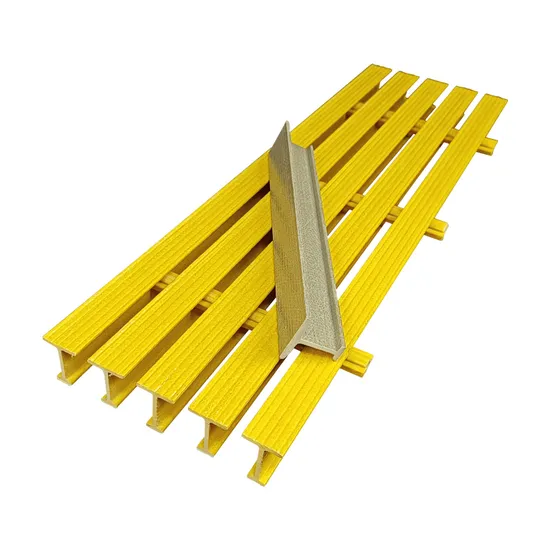
Why Choosing the Right FRP Pultruded Grating Manufacturer Matters
Selecting an FRP pultruded grating manufacturer is fundamentally different from choosing a distributor or reseller. A manufacturer controls raw material sourcing, production quality, lead times, and pricing at the source. A distributor adds markup — typically 20-40% — and relies on third-party factories whose quality systems they cannot directly control. For projects exceeding 500 m², the cost difference between buying factory-direct versus through a distributor can exceed 30-40%, while the quality risk increases with every intermediary in the supply chain.
This pultruded grating technical guide provides a 7-point evaluation framework developed from 18+ years of manufacturing experience. Use it to assess any FRP pultruded grating manufacturer — whether in China, India, the United States, or Europe — plus the red flags that signal quality risks, and the specific questions procurement teams should ask before placing an order. By the end, you will have a systematic method to separate legitimate, quality-focused manufacturers from trading companies posing as factories.
7-Point Manufacturer Evaluation Framework
Certifications
Production Capacity
Quality Control
Export Experience
Custom Capability
Pricing Transparency
Communication
1. Certification Checklist — Non-Negotiable Standards
Certifications are the minimum barrier to entry when evaluating any FRP pultruded grating manufacturer. If a manufacturer cannot produce valid, verifiable certificates with registration numbers, stop evaluating and move to the next candidate. A missing certification is not a negotiation point — it is a deal-breaker for any project involving structural safety, regulatory compliance, or international shipping.
| Certification | What It Verifies | Required For | How to Verify |
|---|---|---|---|
| ISO 9001:2015 | Quality management system — consistent production processes, traceable material batches, documented continuous improvement, internal audit program | All regulated industries, any export market, any project with liability exposure | Request certificate number and issuing body (SGS, TÜV, Bureau Veritas, DNV). Verify at issuer's online certificate database. ISO certificates are publicly searchable. |
| ASTM E84 | Surface burning characteristics — flame spread index (FSI) and smoke developed index (SDI) per ASTM E84 / UL 723 tunnel test method | US building code compliance (IBC Chapter 26), public access structures, any project with fire safety requirements | Request test report from ISO 17025 accredited laboratory. Reports should specify specimen preparation, conditioning, mounting method, and measured FSI/SDI values. |
| EN 13706 | Mechanical properties and dimensional tolerances for pultruded structural profiles — specifies E23 grade minimum requirements for elastic modulus, flexural strength, and interlaminar shear | European market access, EU-funded infrastructure projects, CE marking prerequisite | Verify compliance declaration references EN 13706-2 (test methods) and EN 13706-3 (specification requirements). Check declared grade (E23 is standard; E17 for lower-performance applications). |
| ANSI A1264.2 | Slip resistance on walking/working surfaces — specifies minimum coefficient of friction (COF) under wet and dry conditions | OSHA 1910.22 compliance, US workplace safety, any project with pedestrian traffic | Request COF test values (static and dynamic). Standard threshold: ≥0.50 COF for level surfaces; ≥0.60 for ramps. Dengtai grit-top surface typically achieves 0.75-0.85 COF. |
| DNV / ABS Type Approval | Marine & offshore classification — structural integrity, fire performance, and material durability in maritime environments per IMO FTP Code | Offshore oil & gas platforms, marine vessels, shipbuilding, any project in international waters | Request type approval certificate with validity dates and approved product scope. Verify at DNV or ABS online approval databases using certificate number. |
| CE Marking | Conformity with EU health, safety, and environmental protection standards — required for legal placement on the European Economic Area market | All EU/EEA imports, EU customs clearance, European project specifications | Request Declaration of Performance (DoP) per EU Construction Products Regulation 305/2011. Verify notified body number and certificate validity. |
2. Production Capacity — Can They Actually Deliver Your Order?
Production capacity directly determines lead time reliability and the manufacturer's ability to handle your project alongside their existing commitments. A manufacturer operating at 90%+ capacity utilization will inevitably delay your order when their larger clients place rush orders. Understanding capacity requires asking quantitative questions, not accepting vague assurances.
Q1 What is your annual output in square meters?
Serious manufacturers measure production in hundreds of thousands of square meters per year. Dengtai: 500,000+ m² annually across multiple independent pultrusion lines. A manufacturer producing under 50,000 m²/year may struggle with orders exceeding 2,000 m².
Q2 How large is your manufacturing facility?
Under 1,000 m² is a workshop, not an industrial factory. Look for 3,000+ m² with physically separated zones: raw material storage, production floor, QC laboratory, finished goods warehouse, and shipping dock. Dengtai: 3,000 m².
Q3 How many pultrusion lines do you operate?
Multiple independent lines provide production redundancy. If one line undergoes maintenance or experiences a fault, production continues on others — your order is not halted. Dengtai operates multiple lines with independent control systems, power supplies, and pulling mechanisms.
Q4 What is your current capacity utilization rate?
Ask directly: "What percentage of your total monthly capacity is currently committed for the next 60 days?" Honest manufacturers will give you a straight answer. If they dodge the question, they are likely overbooked and will deprioritize new orders.
Q5 What are your typical lead times by order size?
Standard stock configurations (100-500 m²): 15-20 days. Medium custom orders (500-2,000 m²): 25-35 days. Large custom projects (2,000+ m²): 35-50 days. If a manufacturer quotes the same lead time regardless of order size, they are not accounting for production scheduling reality.
Q6 What is your largest single order delivered?
A manufacturer who has never delivered an order of your size faces a learning curve — at your expense. Ask for the largest single-project order they have successfully delivered on time and request a reference contact from that project.
3. Quality Control — What Happens Before Your Order Ships
A manufacturer's real QC system — not the one described on their website — is the single most important determinant of what arrives at your job site. The difference between a comprehensive QC protocol and a superficial one is the difference between grating that performs for 25+ years and grating that delaminates in 18 months. Here is what professional QC looks like at each production stage versus what inadequate QC looks like.
| QC Stage | Professional Manufacturer Protocol | Inadequate — What to Watch For |
|---|---|---|
| Raw Material Receiving | Every shipment of glass roving tested for tex (linear density) and sizing compatibility. Every resin batch tested for viscosity, gel time, and reactivity. Certificates of Analysis from suppliers filed and cross-referenced to production batches. Substandard materials rejected before they enter production. | "We trust our suppliers — they've been with us for years." No incoming testing equipment on site. No CoA filing system. |
| In-Process Monitoring | Dimensional checks every 2 hours on every line. Pull-speed and die zone temperatures continuously logged with automated alarms for deviation. Barcol hardness tested hourly to verify cure completeness. Resin bath viscosity and temperature monitored and adjusted in real time. | No in-process checks. Operators "know what good looks like." Temperature controlled by operator experience, not instrumentation. |
| Mechanical Testing | Random bar samples from every production shift tested per ASTM D790 (flexural strength and modulus) and ASTM D2584 (resin content by ignition loss). Results trended over time to detect process drift before it creates non-conforming product. | No mechanical testing equipment on site. "Our design has been proven over years of production — we don't need to test every batch." |
| Panel Assembly QC | Cross-rod insertion depth verified. Epoxy bond pull-out strength tested on statistical sample. Panel flatness measured against granite surface plate — warpage exceeding 3mm over 2m rejected. Dimensional tolerance verified: ±1.5mm on length/width, ±0.5mm on bar spacing. | Purely visual inspection. "If it looks straight, it is straight." No measurement tools used during assembly QC. |
| Load Verification | Full panels from each production lot tested to 1.5× rated uniform load capacity with deflection measured at mid-span. Test results documented and included with shipment documentation. Test panels retained for 90 days for traceability. | No load testing equipment. "The load tables are calculated from material properties — physical testing isn't necessary." |
| Final Inspection & Documentation | 100% visual inspection under adequate lighting (≥500 lux). 10% random dimensional sampling per AQL 2.5 (normal inspection level II). Surface finish and color verified against approved reference samples. Complete QC data package compiled per shipment: material certs, in-process logs, mechanical test results, final inspection report, and certificate of conformance. | Quick visual glance before packing. No measurement tools. No documentation beyond a commercial invoice. "You don't need all that paperwork — the product speaks for itself." |
4. Export Experience — Domestic Manufacturing ≠ Export Capability
Producing FRP grating for the domestic market and exporting it internationally are fundamentally different skill sets. A manufacturer with strong domestic credentials may still fail at export due to inadequate logistics knowledge, documentation errors, or lack of familiarity with destination-country standards and customs procedures. Evaluate export experience separately from manufacturing capability.
Logistics Expertise
Container optimization to maximize m² per container and minimize per-unit freight cost. FOB vs CIF vs EXW expertise for your specific port and destination. Knowledge of ocean carrier reliability by route. Experience with break-bulk shipments for oversized panels exceeding standard container dimensions.
Documentation Mastery
Correct HS code classification (3925.90 for FRP building products in most jurisdictions). Certificate of Origin (Form A for GSP, Form F for China-ASEAN FTA). Commercial invoice and packing list in destination-country language when required. Compliance documentation specific to your import jurisdiction.
Market-Specific Knowledge
ASTM standards for North American markets. EN standards for Europe. AS/NZS standards for Australia and New Zealand. Language capability for technical discussions in your procurement team's working language. Time zone coverage for responsive communication during your business hours.
5. Custom Manufacturing — Beyond the Standard Catalog
Standard catalog products cover approximately 70% of FRP grating projects. For the remaining 30%, you need a manufacturer with genuine custom engineering and production capability — not just a promise to "try." Custom capability separates true manufacturers from distributors who can only sell what is in stock.
| Custom Capability | Why It Matters | Key Question to Ask | What a Real Manufacturer Answers |
|---|---|---|---|
| Custom Resin Formulations | Your specific chemical environment may require a resin blend not in any standard catalog — for example, a hybrid vinyl ester with enhanced resistance to a specific solvent at elevated temperature | "Can you formulate a custom resin system for our specific chemical exposure conditions, and will you provide chemical resistance test data for that formulation?" | "Yes. Send us your chemical list with concentrations and temperatures. Our resin supplier's formulation lab will recommend a blend, and we will produce sample coupons for your in-situ exposure testing before production." |
| Non-Standard Bar Depths | Unusual span-to-load ratios may require bar depths between standard sizes — for example, 32mm rather than 25mm or 38mm — to optimize material use and cost | "What is the full range of bearing bar depths you can produce, and do you have existing dies or would custom tooling be required?" | "We can produce any depth from 20mm to 75mm. Depths matching our existing die inventory (25, 30, 38, 50mm) use standard tooling. Intermediate depths may require custom dies with a one-time setup charge." |
| Custom Panel Dimensions | Factory pre-cutting to your exact installation dimensions eliminates on-site cutting labor, reduces waste by up to 90%, and accelerates installation by 60-80% | "Can you ship panels cut to our exact specified dimensions with cut edges sealed, and what is the dimensional tolerance you guarantee?" | "Yes. We CNC-cut panels to your dimensioned drawings with ±1.5mm tolerance. All cut edges are sealed with catalyzed resin matching your panel's resin system. We provide a cut-list verification report with every shipment." |
| Custom Colors | Safety color coding (OSHA yellow, safety green) or corporate brand alignment may require specific colors not in the standard range | "Can you color-match a specific RAL or Pantone reference, and what is the minimum order for a custom color?" | "We can match most RAL and Pantone colors by adjusting pigment loading in the resin bath. Minimum order for custom color: typically 200 m², depending on resin type and color complexity." |
| OEM Private Label | Distributors and project-specified suppliers often require products shipped under their own brand with custom part numbers and documentation | "Do you offer full OEM manufacturing — our branding on products, packaging, test reports, and all shipping documents? Is a confidentiality agreement standard?" | "Yes. OEM is a significant portion of our business. We apply your branding to panels, packaging, labels, and all documentation. NDAs are standard and typically executed within 48 hours of request." |
| Pre-Assembly & Kitting | Pre-assembled modules with pre-installed fasteners can reduce on-site installation time from weeks to days on large projects | "Can you pre-assemble grating panels into larger modules with fasteners installed before shipping, and how do you package them to prevent damage during transit?" | "We pre-assemble modules up to 8'×20' depending on shipping constraints. Modules are steel-strapped to custom wood pallets with protective edge guards and interleaved with foam separation sheets." |
6. Pricing Factors — What Actually Determines Your Quote
FRP pultruded grating pricing varies significantly between manufacturers. Understanding pultruded grating specifications and what drives cost helps you compare quotes on an apples-to-apples basis and identify quotes that are suspiciously low — which almost always indicate cut corners in resin content, glass quality, or QC.
Primary Cost Drivers (Direct Material & Production)
- Resin Type Isophthalic Polyester (baseline 1.0x) → Vinyl Ester (1.2-1.3x) → Fire Retardant (1.1-1.2x) → Phenolic (1.5-1.7x). Resin alone can swing total cost 50-70%.
- Bar Depth 25mm → 38mm (+30-40% material) → 50mm (+60-80% material). Deeper bars require more glass and resin per linear foot.
- Bar Spacing 2" spacing uses approximately 25% fewer bars per panel than 1.5" spacing. Closer spacing = higher cost but higher load capacity.
- Profile Type T-Bar uses roughly 15-20% more material than I-Bar at equal depth due to thicker cross-section.
- Panel Size Standard 4'×20' panels maximize production efficiency. Custom sizes under 3'×10' increase per-m² cost due to higher cutting waste.
- Order Volume Under 200 m² typically carries a 10-15% small-batch premium. 1,000+ m² often qualifies for volume pricing 5-10% below standard rates.
Hidden Costs — What Inexperienced Buyers Miss
- Ocean Freight FOB price vs landed cost can differ 10-25%. Always request CIF quotes for true comparison. Container type matters: 40'HC holds approximately 30% more panels than 40' standard.
- Import Duties Vary significantly by country and HS code classification. US: typically 5.3-6.5% under HTS 3925.90. EU: 6-7%. Middle East: often 5%. Verify with your customs broker before comparing quotes.
- Seaworthy Packaging Standard domestic packaging will not survive ocean transit. Seaworthy packing (steel-strapped pallets, VCI corrosion protection, moisture barrier) adds 2-5%.
- Custom Tooling Non-standard bar profiles or depths may require custom pultrusion dies. One-time setup cost: typically $2,000-8,000 per die set, amortizable over production volume.
- Inspection Third-party inspection (SGS, Bureau Veritas, TÜV) adds $1,500-3,000 per visit but provides independent quality verification worth far more for large orders.
- Samples Some manufacturers charge for samples ($100-500). Dengtai provides free A4-sized samples for qualified inquiries — courier cost only.
7. Communication — The Test Most Buyers Skip (And Regret)
Before placing any order, test the manufacturer's communication quality with a detailed technical inquiry. How they handle your pre-sale questions is a near-perfect predictor of how they will handle post-sale issues. Many buyers skip this step in their urgency to get a quote — and discover communication problems only after payment has been made and production has begun.
Response Time
Professional manufacturers respond to inquiries within 24 hours — often within 4-6 hours during business hours. If a pre-sale inquiry takes 3+ days for an initial response, imagine the response time when you have a quality issue with a container already at sea. Test: send your inquiry on a Monday morning your time. Track response time to the hour.
Technical Depth
Send a multi-part technical question covering load requirements, chemical exposure, and certification needs. Professional manufacturers answer every question point by point with specific data. Non-professional manufacturers dodge technical questions and push for a price-only discussion. Test: include at least one question that requires engineering knowledge to answer correctly.
Language Precision
Technical FRP specification requires precise terminology in your language. Test: ask a question about "interlaminar shear strength" or "creep rupture under sustained load." If the response shows confusion about these terms, the communication gap may lead to incorrect specifications in production. Miscommunication on specs is the #1 cause of rejected shipments in international FRP trade.
Factory-Direct vs Distributor — The True Cost Comparison
| Factor | Factory-Direct (Dengtai) | Distributor / Reseller | Cost Impact |
|---|---|---|---|
| Unit Price | Ex-factory manufacturing cost — no intermediary layers | Factory cost + distributor margin (20-40%) + potential sub-distributor margin | Distributor typical premium: 20-40% |
| Custom Orders | Direct engineer-to-engineer communication with production team. Feasible for any volume — even single-panel prototypes | Specifications relayed through distributor sales staff to factory. Small custom orders often rejected — "below minimum" | Custom capability often unavailable through distributors for sub-200 m² orders |
| Quality Transparency | Full factory audit access. Batch QC reports provided as standard. Material certifications traceable to specific production dates | Limited to no visibility — you trust the distributor's choice of factory, which may change between orders without notice | Quality risk: unknown and uncontrolled when buying through intermediaries |
| Lead Time | Direct from production schedule — no coordination lag. Changes communicated immediately | Factory lead time + distributor processing time (2-5 days) + communication lag for changes or questions | Distributor typical lead time penalty: 1-2 weeks |
| Technical Support | FRP engineers who designed and produced your grating answer technical questions with manufacturing-specific knowledge | Generalist sales staff with catalog-level knowledge. Complex questions must be relayed to the factory — wait 2-3 days for answers | Technical accuracy: factory-direct eliminates the "telephone game" of relayed answers |
| MOQ Flexibility | Negotiable — mix multiple product types (grating, stair treads, structural shapes) to meet minimums | Fixed MOQ per product SKU. Less willingness to negotiate mixed-product orders | MOQ flexibility can determine whether a smaller project is viable at all |
| After-Sale Accountability | Single point of responsibility — the same company that manufactured the product resolves any issues directly | Issues must go through distributor who contacts factory. Finger-pointing between parties is common when problems arise | Resolution time for quality issues: days (factory-direct) vs weeks (through distributor) |
6 Red Flags — Warning Signs That Should Stop Your Evaluation
Cannot Provide Verifiable Certificate Numbers
Claims of ISO/ASTM/DNV certification without verifiable registration numbers you can independently check at the certifying body's database. This is the single most common fraud in international industrial sourcing. Always verify before paying.
Refuses Factory Visit or Live Video Tour
A legitimate manufacturer is proud to show their facility. Refusal — especially when paired with excuses — strongly indicates a trading company posing as a factory. They may not have a factory to show you.
Quote 30%+ Below Market Average
Get 3 quotes for comparison. If one is dramatically lower, they are cutting costs somewhere — most commonly resin content (using less resin than specified), glass quality (using lower-grade or recycled glass), or QC (eliminating testing). FRP manufacturing has real material costs that cannot be cheated without consequences.
Zero Export Track Record to Your Region
Never shipped to your country or trade bloc? Expect customs clearance problems, incorrect documentation, wrong HS codes, and no familiarity with your local standards. Ask for references specifically in your country or region.
Vague, Non-Committed Lead Times
"About 3-4 weeks, depending on our schedule" is not a commitment — it is a warning. Professional manufacturers provide a specific ship date within 48 hours of order confirmation and update you proactively if anything changes.
Demands 100% Payment Upfront
Standard international B2B payment terms for industrial materials: 30% deposit with order, 70% against copy of shipping documents or before release of Bill of Lading. 100% upfront payment removes all your leverage — if quality is substandard, you have already paid in full and have no recourse.
Dengtai Manufacturing Profile — Verified Credentials
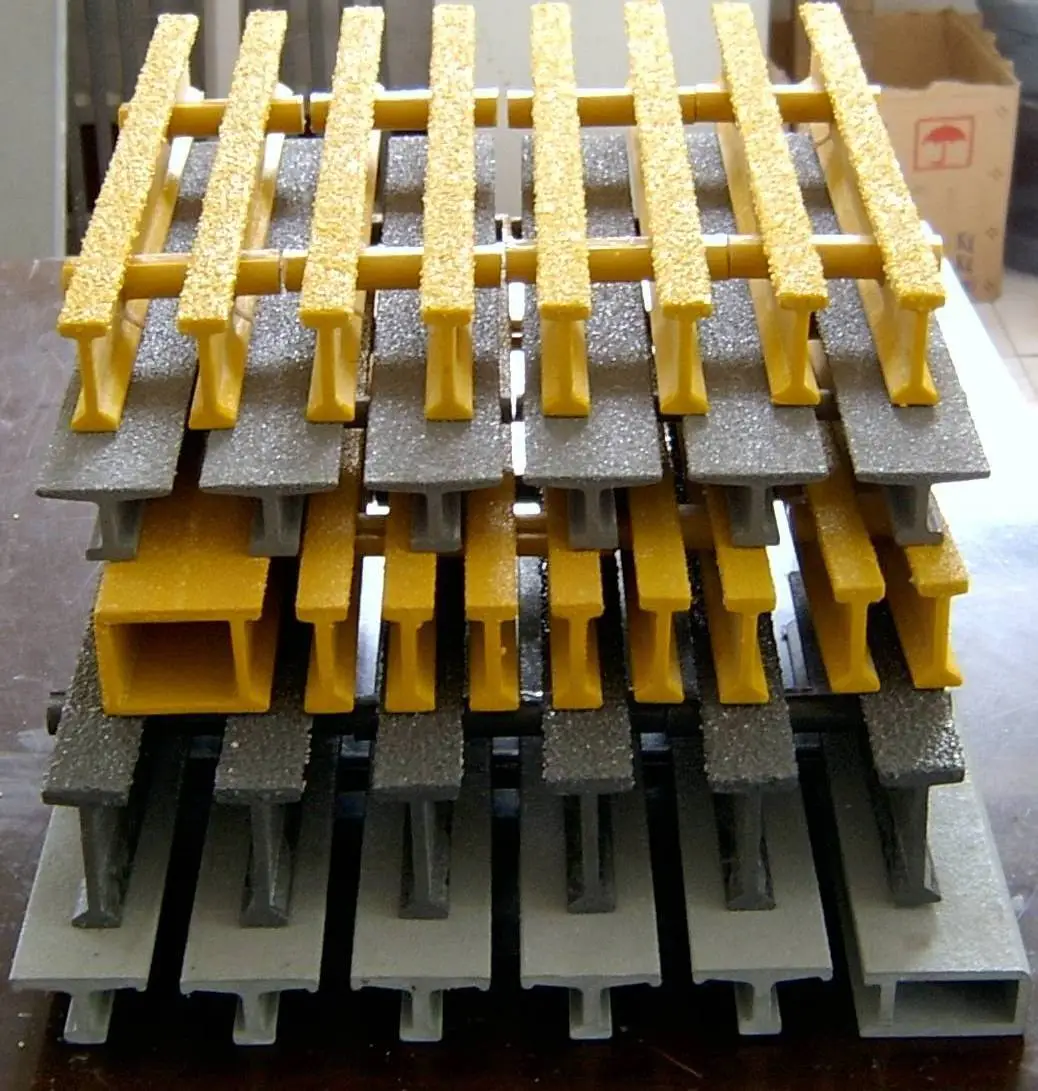
ISO 9001:2015 Certified Since 2015
- Founded: 2005, Shijiazhuang, Hebei Province, China
- Facility: 3,000 m² with dedicated raw material, production, QC lab, finished goods, and shipping zones
- Annual Capacity: 500,000+ m² across multiple independent pultrusion lines
- Clients Served: 1,200+ across 50+ countries on 6 continents
- Certifications: ISO 9001:2015, ASTM E84 Class I/II, EN 13706 E23, CE Marking, DNV/ABS Type Approval
- Key Export Markets: United States, Germany, Australia, UAE, Saudi Arabia, Singapore, Brazil
- Payment Terms: T/T 30% deposit / 70% before shipment. L/C at sight accepted.
- Typical Lead Time: 15-20 days (stock configs) / 25-35 days (custom) / 35-50 days (large projects)
- QC Documentation: Complete data package with every export shipment — material certs, in-process logs, mechanical test results, final inspection report, certificate of conformance
Sample RFQ — What to Include for an Accurate Quote
Providing complete information in your initial inquiry dramatically reduces the back-and-forth and gets you an accurate quote faster. Here is a checklist of what a professional RFQ for FRP pultruded grating should include:
Professional RFQ Checklist — 14 Items for an Accurate Quote
Providing these details in your initial inquiry eliminates back-and-forth and typically gets you a complete quotation within 24 hours.
Frequently Asked Questions
Ask for the certificate number and the name of the issuing certification body (e.g., SGS, TÜV Rheinland, Bureau Veritas, DNV, Intertek). Every legitimate ISO certificate is publicly verifiable at the issuer's online certificate database — simply enter the certificate number to confirm it is valid, current, and covers the correct scope (FRP/composite manufacturing). Dengtai provides certificate numbers with every quotation. If a manufacturer refuses to share their certificate number, assume the certification is fabricated.
Standard MOQ for stock resin/color/profile configurations is 100 m². Custom resins, non-standard colors, or specialized bar profiles typically require 200-500 m² due to production setup (resin bath cleaning and refilling for color changes, die changeover time). Dengtai can often combine multiple product types — grating, stair treads, and structural shapes — within a single order to help you reach MOQ thresholds without over-ordering any one item. Contact us with your full scope for a realistic MOQ assessment.
Chinese manufacturers (like Dengtai) offer the most competitive price-to-quality ratio for medium to large orders (200+ m²). China's FRP supply chain is the world's most mature, with vertically integrated glass fiber, resin, and processing industries. Indian manufacturers are competitive for Middle East, Africa, and South Asian markets due to shorter shipping routes and preferential trade agreements. US/European manufacturers offer faster domestic delivery and Buy America/Buy European Act compliance but at typically 2-3× the unit cost. Evaluate by verifiable certifications and export track record, not country of origin. A certified Chinese manufacturer with 50+ country export experience is lower risk than an uncertified domestic supplier.
Request A4-sized (approximately 8"×12") sample panels showing I-Bar and T-Bar profiles, your specified surface finish (grit-top or smooth), and your specified color. Dengtai provides free samples for qualified project inquiries — the recipient covers courier shipping cost (typically $50-150 depending on destination). Sample lead time: 3-5 business days from request. For critical applications, we can also provide test coupons for independent laboratory verification of mechanical properties and fire performance before production begins.
Yes to both — and both are strongly recommended for orders exceeding 500 m² or $50,000 in value. Factory audits: Dengtai welcomes client visits to our Shijiazhuang facility. We can also arrange live video tours via WeChat, WhatsApp, or Zoom if travel is not feasible. Third-party inspection: We routinely work with SGS, Bureau Veritas, TÜV, and Intertek inspectors. Inspectors have full access to our production floor, QC lab, and documentation. Inspection can be scheduled at pre-production (material verification), during production (in-process check), and/or pre-shipment (final inspection). A manufacturer who refuses independent inspection should be eliminated from consideration immediately.
Standard international B2B terms: 30% deposit via T/T (wire transfer) upon order confirmation, 70% balance before shipment release or against copy of shipping documents (Bill of Lading). Irrevocable Letter of Credit (L/C at sight) from a reputable issuing bank is also accepted for larger orders. Never agree to 100% upfront payment to an unverified supplier — it eliminates your financial leverage if quality or delivery issues arise. Dengtai's standard terms: T/T 30/70 or L/C at sight. Payment terms are negotiable for established repeat clients.
Ready to Source from a Verified FRP Pultruded Grating Manufacturer?
Get a factory-direct quote with verifiable ISO 9001:2015 certification, complete technical specifications, batch QC documentation, and competitive FOB/CIF pricing. Free samples available for qualified project inquiries.
500,000+ m² annual capacity | 1,200+ clients | 50+ export countries | ISO 9001 since 2015 | Typical quote: within 24 hours
Continue Reading
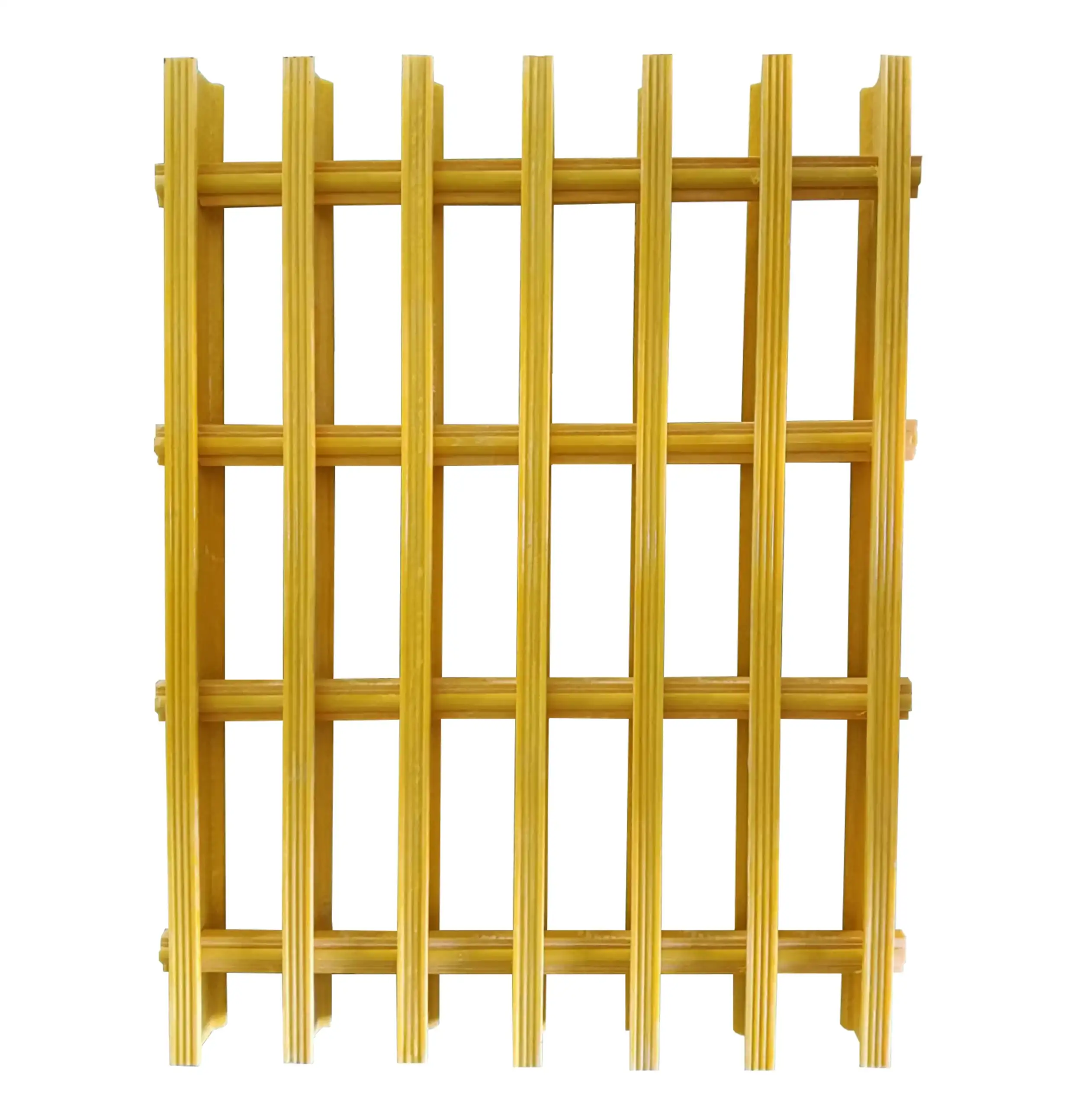
FRP Grating for Offshore Oil & Gas Platforms: Complete Guide
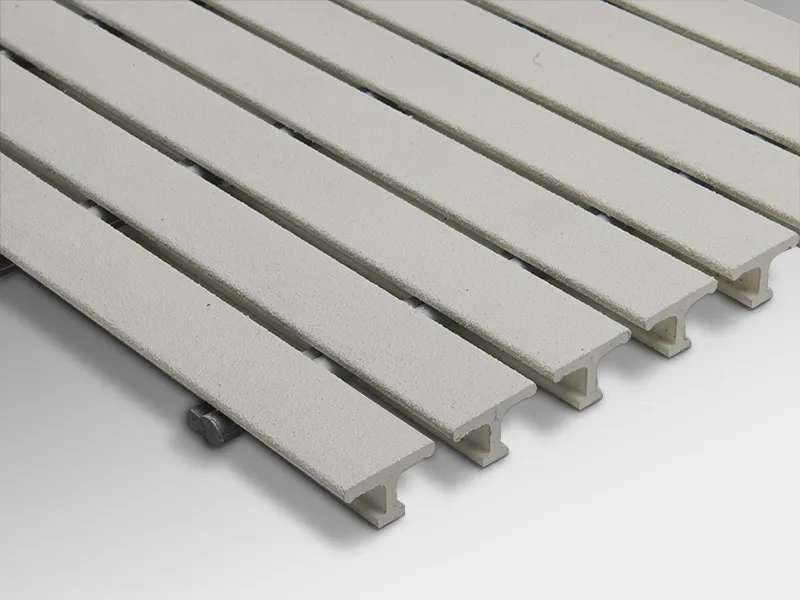
Fiberglass Grating for Sale: Complete B2B Sourcing Guide for Importers
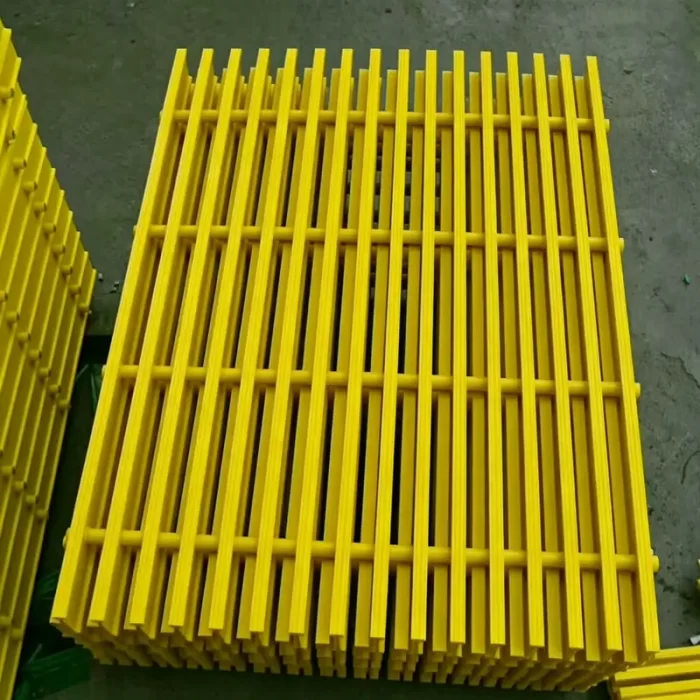
FRP Cooling Tower Grating: Applications, Benefits & Selection Guide
Fiberglass Grating - Industrial FRP Grating
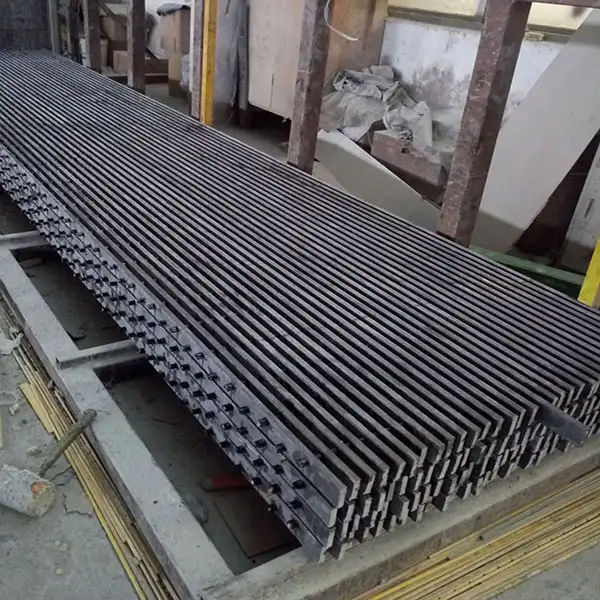
FRP Pultruded Grating - High-Strength Industrial Grating
FRP Support Beam - I-Beam & Structural Support
Source from a Verified FRP Manufacturer
Factory-direct quote with verifiable ISO 9001, batch QC reports, competitive pricing.